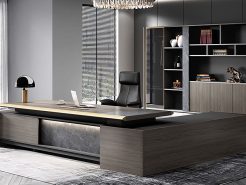

During design and construction of luxury office, the question I receive most often is not about color or material. But: “Should I choose a high or low ceiling to make the space truly luxurious and effective?” In fact, the ceiling height not only determines the feeling of spaciousness or narrowness. It also directly affects the working energy, the flow of movement. And the way the brand is “read” through the space. For me, the ceiling of a luxury office is always a statement. Either opening up the freedom, or leading to deep concentration. And to choose correctly, we must really understand the people who will work under that space.
1. Design and construction of luxury office with high ceiling
Advantages of high ceilings in design and construction of luxury office
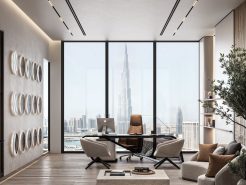
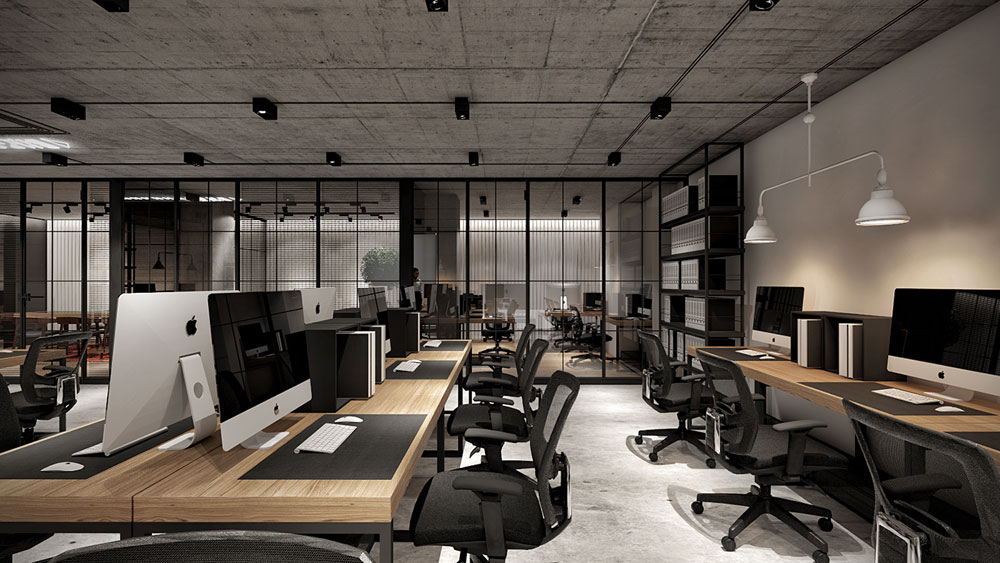
In luxury office design, high ceilings have long been a standard that reflects the aesthetic thinking and operational strategy of the business. When the height reaches 3 – 3.5m, the space immediately feels more open, airy and luxurious. This is a key factor in helping employees maintain a positive mental state throughout the day. High ceiling height also supports better air circulation. Significantly reduces the feeling of claustrophobia often found in traditional office models. Thereby improving health, concentration and overall productivity.
With high ceilings, architects have the space to arrange natural and artificial lighting systems in hanging or drop form. Creating multi-layered layers of artistic light. This is also the ideal foundation for many interior styles. Such as industrial luxury, tech-lux or corporate premium… Styles that require openness and the ability to display materials. In addition, high ceilings also allow the integration of many layers of soundproofing solutions without affecting the usable space. Helps ensure privacy and sound quality for important meeting rooms.
Disadvantages of High Ceilings – Challenges to Manage in High-End Design
Although it brings many values, high ceilings in luxury offices also pose many challenges for businesses when implementing. First is the cost: MEP system, HVAC, hanging lights, sensors and operating equipment. It costs more budget due to the high construction height. Air conditioning for high ceilings also requires larger capacity. This leads to a significant increase in electricity costs if there is no optimal adjustment solution.
In addition, high ceilings are only truly beautiful when carefully handled. An unsynchronized design can easily make the space feel cold, empty or create a feeling of “diluted energy”. Especially if choosing an open ceiling style – which is popular in modern offices. The construction team must have a high level of expertise to ensure that pipes, wires, and cable trays are scientifically organized. Just one unsightly technical exposure point can destroy the entire sophistication and class of the workspace. This is the reason why high-end offices always prioritize contractors with technical capacity and experience in handling large ceilings.
Which offices are suitable for high ceilings?
High ceilings are most valuable in large offices, especially those over 500 m². Where large spaces can be used to create a seamless and luxurious visual experience. This is an ideal choice for companies pursuing a creative, technological or high-end financial image. Sectors that value brand identity, performance and the quality of the internal environment. For these businesses, high ceilings are not just an aesthetic choice. They are also an affirmation of vision, culture and operational class.
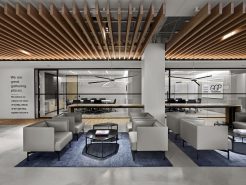
In addition to the main working area, high ceilings are especially effective in spaces that emphasize experiences. Such as reception halls, lounges, breakout areas or multi-purpose areas. Here, high ceilings create conditions for arranging artistic lighting, large green trees, large-scale decorative works. Or architectural lines to create highlights. Thanks to that, when entering, employees and partners can immediately feel the investment and spiritual value that the business wants to convey. With the goal of enhancing the daily working experience, high ceilings are a solution worth considering. Both practical and highly symbolic.
>> See more: Why are luxury offices loved by genz?
2. Low ceiling – New luxury in design and construction of luxury office
Advantages of low ceilings – Compact space for deep working performance
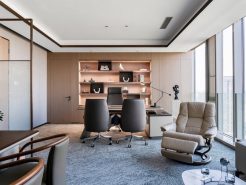
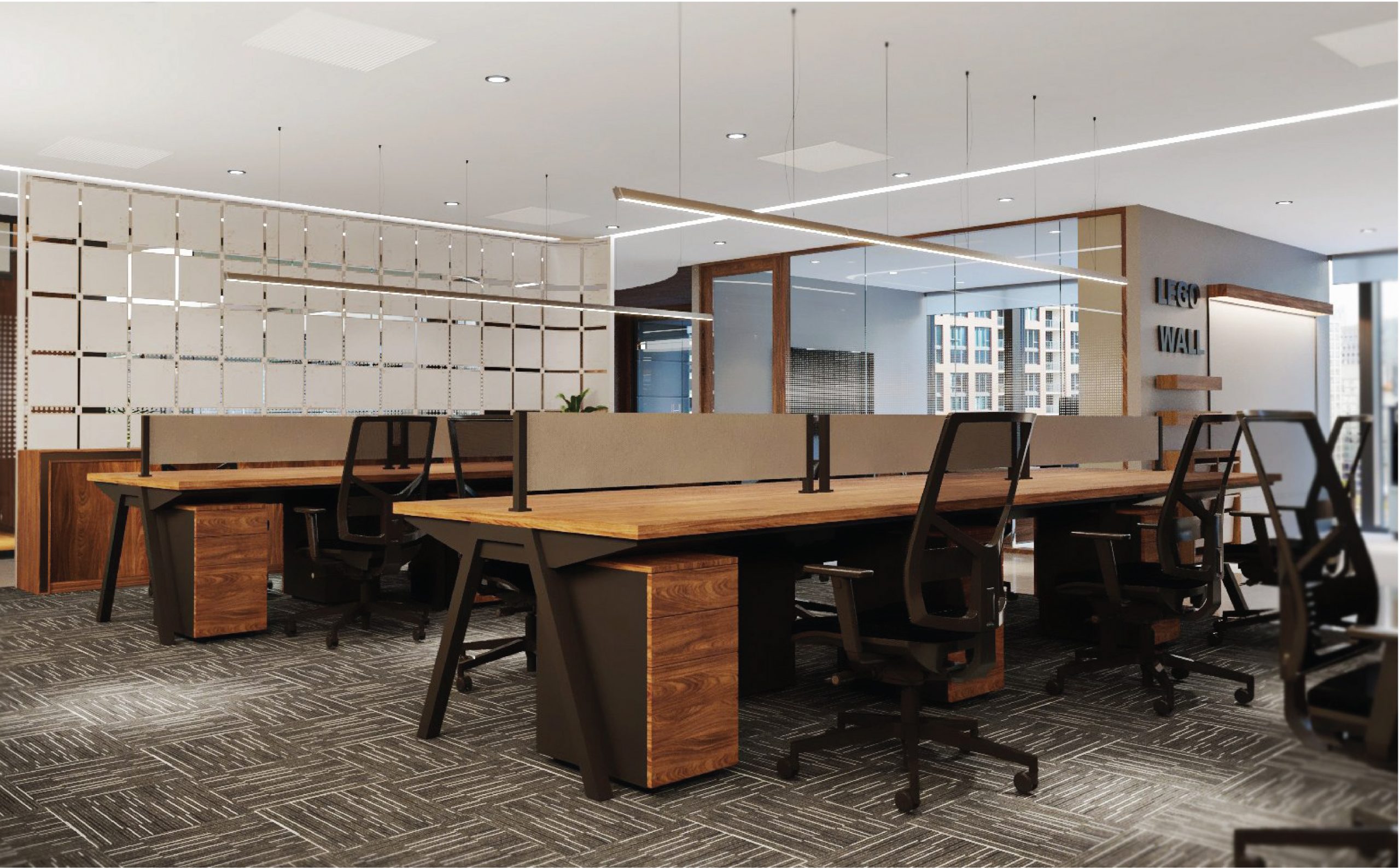
In the current trend of luxury office design, low ceilings are becoming a sophisticated choice that reflects the philosophy of “low-profile luxury”. Luxury is expressed through restraint and rationality rather than ostentation. With a moderately low ceiling, the workspace forms a “concentrated energy zone”. Creating a warm and safe feeling, strongly supporting activities that require deep concentration. This is a factor that businesses increasingly focus on when aiming for an environment that supports maximum personal performance.
In addition, low ceilings have a natural advantage in acoustics. They help limit reverberation and echo, thereby creating a quiet and seamless space. This is extremely important for offices that focus on privacy, professionalism and effective internal communication. Not only that, low ceiling solutions also save significant energy by reducing the load on air conditioning and lighting systems. Creating a green and sustainable operating model. In terms of aesthetics, low ceilings bring a sense of absolute neatness and tidiness. Very suitable for businesses pursuing a minimal but classy image. Where sophistication lies in every smallest detail.
Disadvantages of low ceilings – Common risks in high-end spaces
Despite its many advantages, low ceilings in luxury offices also make businesses consider carefully when implementing. One of the biggest risks is the risk of losing the sense of luxury. If the lighting system or the materials of the ceiling, walls, and floors are not handled delicately. Just too bright light, unbalanced colors or inconsistent materials. The space can become heavy, dark and unattractive. Completely contrary to the spirit of a high-class office for employees.
In addition, if the ceiling is lower than the standard of 2.6m, a feeling of stuffiness and compressed energy may appear. Directly affecting psychology, comfort and creativity. In a working environment that requires concentration and inspiration, this is a taboo factor. Low ceilings also limit the ability to arrange artistic lighting systems. Hanging lights or large-scale decorative elements. Therefore, with luxury offices, the design team needs to calculate extremely precisely. Let the low ceiling become an aesthetic and operational advantage. Instead of being a minus point that unintentionally reduces the employee experience.
When should you use low ceilings?
Low ceilings maximize their value when applied to small or medium-sized offices (150–400 m²). Where the space needs to be tightly organized and oriented towards intimacy and warmth while still maintaining luxury standards. Businesses pursuing minimal luxury, Japan-lux or Scandinavian premium styles. This solution is especially suitable, because these designs all emphasize simplicity. Emotional balance and absolute efficiency in every centimeter of space.
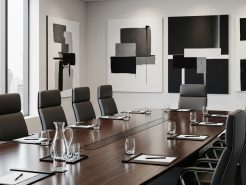
In practice, low ceilings are particularly effective in spaces that require high concentration. Or require good acoustic control such as individual work areas. Small conference rooms, online meeting rooms, data analysis areas, human resources areas or departments that require strong privacy. When handled properly, low ceilings not only bring warmth and efficiency to work. But also contribute to building a unique interior identity. A form of “silent luxury” that many businesses are aiming for in the era of offices that focus on employee experience.
>> See more: Avoid feng shui mistakes when choosing luxury office furniture.
3. Expert perspective – What is the true luxury choice?
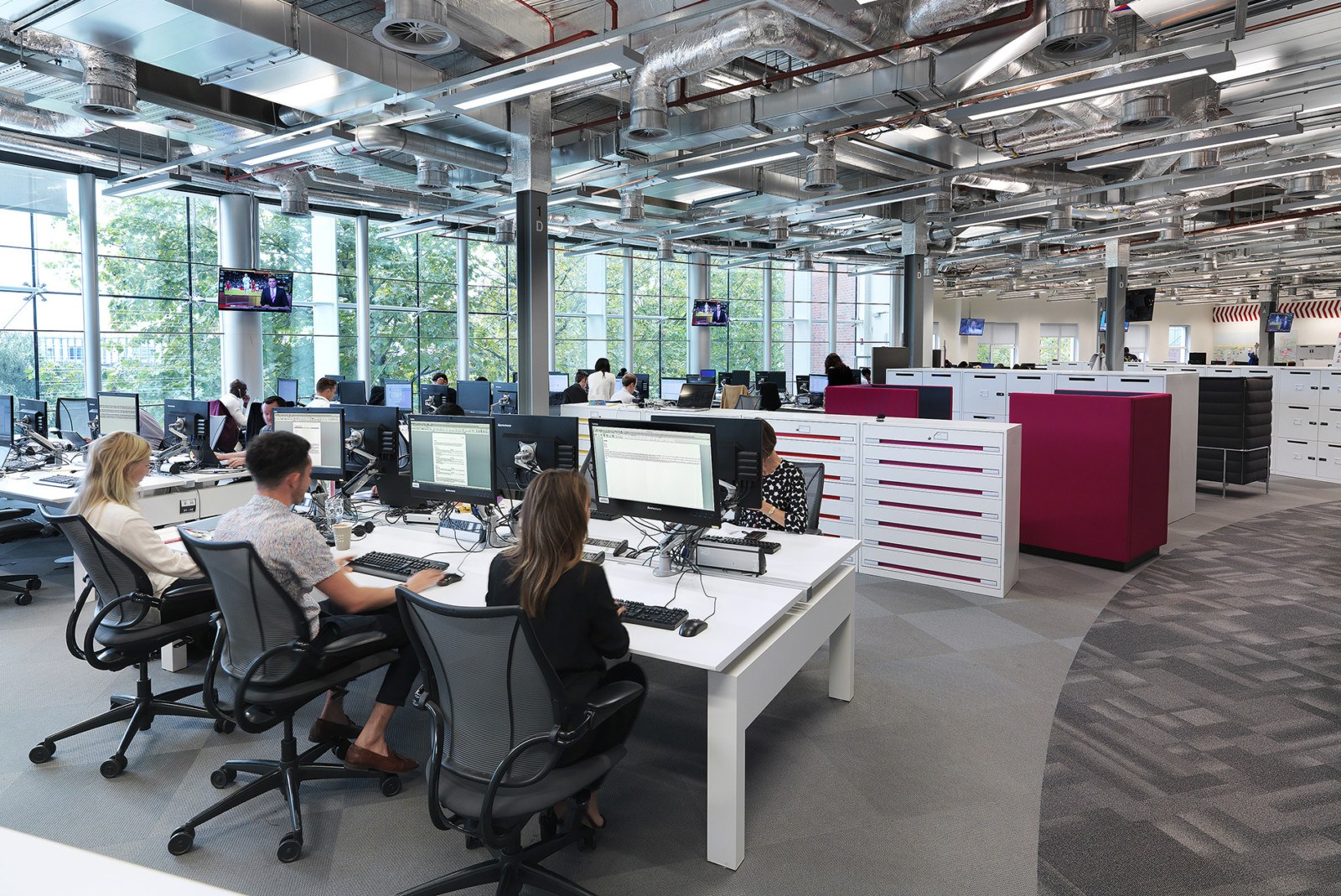
In the design and construction of luxury offices, the story of “high or low ceiling” is no longer a choice of preference. It is a strategic problem combining feeling, function and brand identity. A truly classy space does not only lie in the impressive ceiling height. It lies in the seamless experience that the business wants its employees to feel every day. High or low ceiling must reflect the true spirit of the brand. Suitable for the flow of movement, work pace and the nature of each functional area.
The nature of the work is an important deciding factor. Creative, media or R&D departments often need high ceilings to promote freedom and openness of thinking. Meanwhile, concentrated work areas of human resources or data analysis rooms are suitable for low ceilings. Because it brings a sense of security, warmth and reduces noise. At the same time, the building’s floor plan is also a natural limit. Many class A offices do not allow the ceiling to be too low due to MEP requirements. While it is also difficult to raise the ceiling too high without increasing air conditioning and operating costs.
Current luxury office trends
Currently, the prominent trend in luxury offices is the Hybrid ceiling solution. Combining high and low according to smart zoning. Lobby, pantry, creative area have raised ceilings to increase impression and energy. Co-working area and meeting room use low ceilings to optimize performance. Lounge and circulation prioritize open ceilings with artistic treatment to create visual rhythm. This approach is not only cost-optimized. But also creates a stratified experience. A typical mark of luxury office for employees in the new era.
>> See more: The ideal chair in luxury office design and construction.
=====\
PROCE – TOTAL LUXURY OFFICE SOLUTION
Website: https://proce.vn/
Youtube: https://www.youtube.com/@noithatvanphonghangsang
Fanpage: https://www.facebook.com/vanphongnhapkhauProce
GG Business: https://business.google.com/dashboard/l/15115233216900975876
Linkedin: https://www.linkedin.com/company/74359718/admin/
Hotline: 090.115.6767
#van_phong_hang_sang; #noi_that_van_phong_hang_sang
#thiet_ke_thi_cong_van_phong_hang_sang
#thiet_ke_noi_that_van_phong_hang_sang