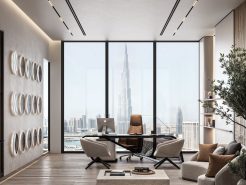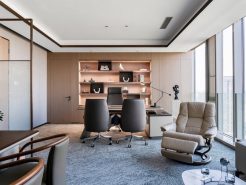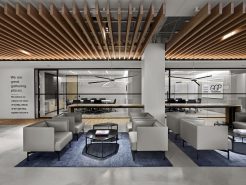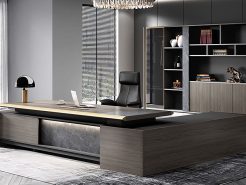
Flooring in luxury office interior is rarely mentioned as a “problematic” element until it starts to blister. What’s noteworthy is that this phenomenon usually appears neither too early nor too late, but precisely after about a year of use. From a designer’s perspective, I believe this isn’t a coincidence, but rather the inevitable result of the interaction between materials, the operating environment, and high aesthetic standards. When flooring is subjected to the pressures of luxury, air conditioning, high frequency of use, and expectations of perfection, hidden weaknesses gradually become apparent.
1.Luxury office interior – Technical factors leading to floor blistering
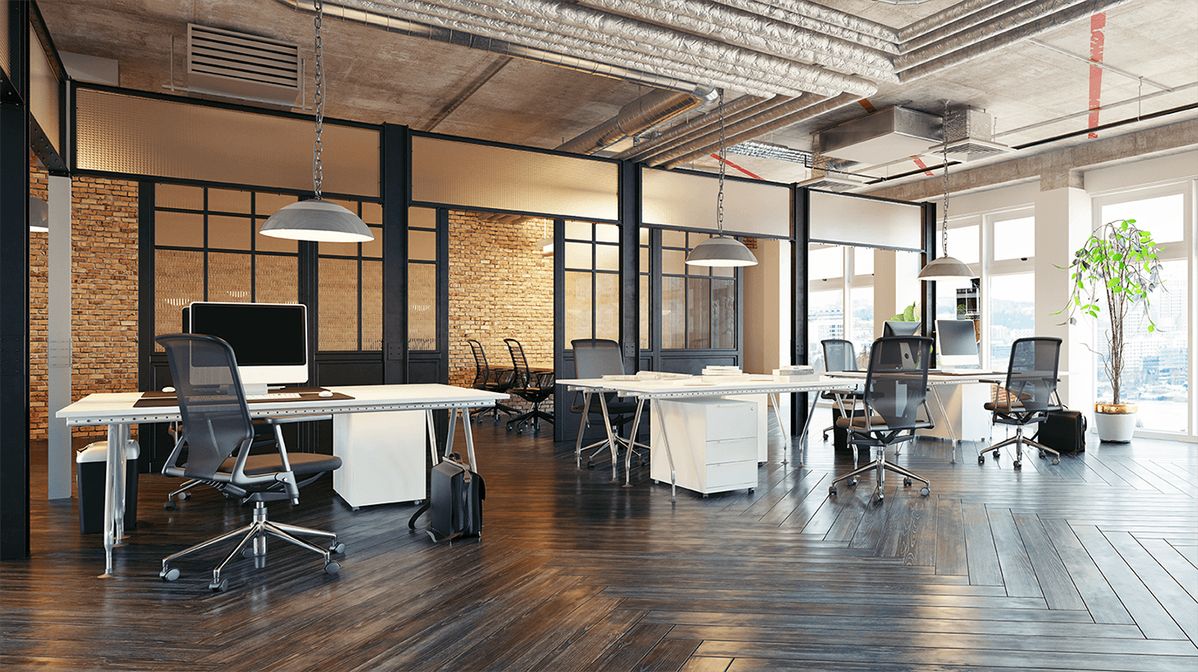
Flooring material and physical properties – The root cause of floor blistering
When it comes to the phenomenon of floor blistering, the first factor that experienced professionals always consider is the physical nature of the flooring material. Currently, office spaces commonly use three types of flooring: natural wood flooring, engineered wood flooring, and high-end vinyl flooring such as LVT or SPC. Each type of flooring has a completely different structure, stability, and environmental adaptability.
Natural wood flooring offers a luxurious look and a genuine feel. However, solid wood is inherently sensitive to humidity and temperature. Wood tends to absorb moisture from the air and expand seasonally. If not properly dried and installed correctly, swelling or blistering is very likely to occur. Meanwhile, although engineered wood flooring has been heat-pressed and surface-coated, the HDF core still has a certain ability to absorb moisture. In high-humidity environments or substandard subfloors, the core will swell, pushing the interlocking joints and causing surface blistering.
For high-end vinyl flooring like LVT or SPC, many people mistakenly believe they are completely “immune” to blistering. In reality, LVT still expands with temperature, and while SPC is more stable, if expansion joints are not properly calculated during installation or if low-quality materials are used, the floor can still lift. Therefore, understanding the correct material properties is fundamental to preventing risks from the outset.
>> See more: Color trends for the president’s office interior in 2026.
Humidity and temperature – Factors that require absolute control in luxury office interior
In modern office environments, humidity and temperature are often overlooked. However, in reality, these are among the leading causes of floor blistering. Offices frequently use air conditioning, heaters, or central ventilation systems, causing constant temperature fluctuations throughout the day. This temperature difference creates uneven expansion and contraction pressure on the floor surface, especially with materials that have a high coefficient of expansion.
Humidity becomes an even more dangerous factor if not carefully controlled. Wood flooring, whether natural or engineered, tends to absorb moisture from the air. In humid climates, or in buildings with poorly moisture-resistant foundations, moisture from the concrete subfloor can silently seep up to the floor above. Initially, this is difficult to detect. But after a while, the floorboards will begin to swell, warp, and blister at weak points.
A very common technical error I often encounter is the failure to measure and check the subfloor moisture level before construction. Many projects rush to complete their work, skipping this step. This results in floors being installed on subfloors that are not completely dry. This is a “time bomb,” because after only a few months of use, the floor will start to blister for no apparent reason, causing significant financial losses and damage to reputation.
Construction techniques – A decisive factor in the lifespan and stability of the floor
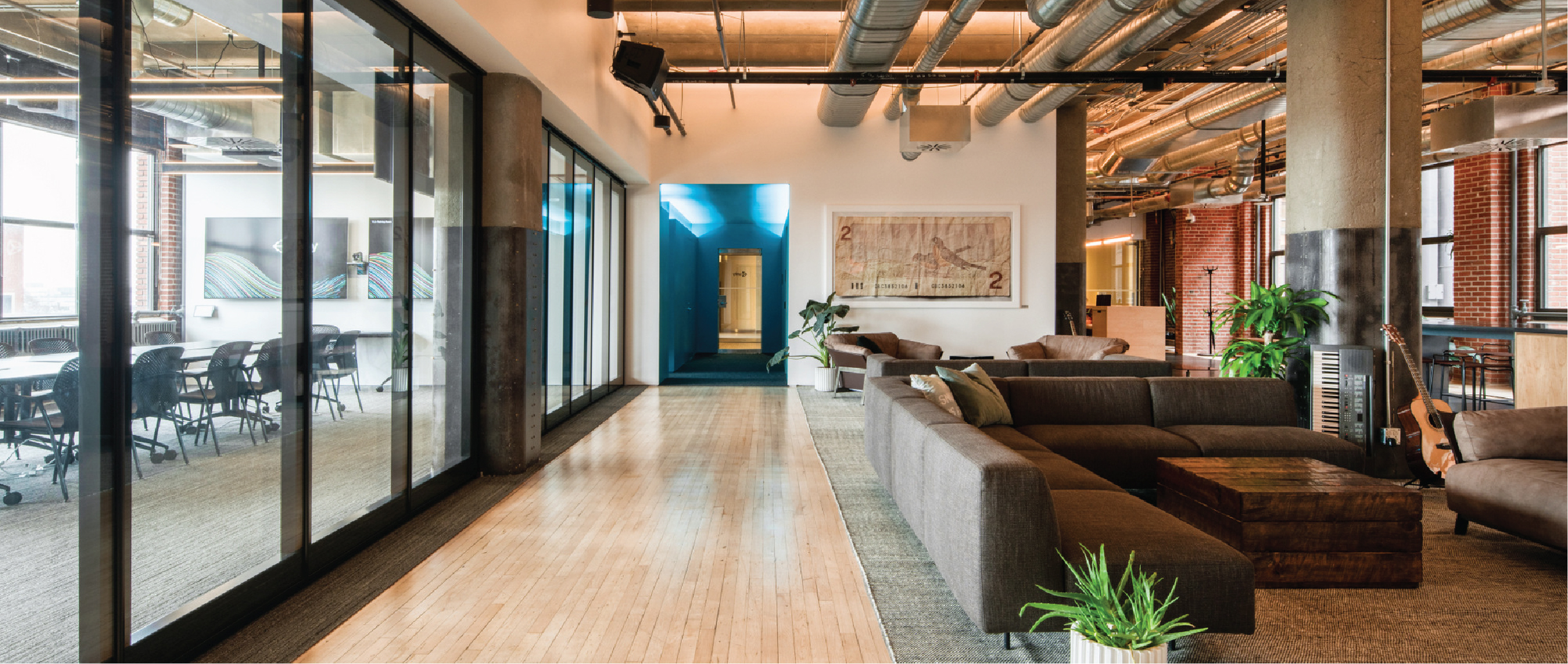
If the materials are the foundation, then the construction technique is the deciding factor in whether the floor will “survive” over time. During consultations and troubleshooting of blistering floors, I’ve noticed that most problems stem from incorrect or substandard construction. These errors may not be immediately apparent, but they become clear after a period of use.
One of the most common mistakes is failing to leave expansion joints around walls, columns, and fixed obstructions. Any type of flooring needs space to expand with temperature changes. When the floor is “stuck,” the expansion forces are concentrated on the surface, causing the floor to lift and blister in weak areas. Furthermore, using low-quality adhesives, fittings, or trim strips also reduces the overall stability of the floor system.
The subfloor also plays a crucial role. If the subfloor is not leveled and has uneven surfaces, the floor will not distribute the load evenly. Over time, areas of concentrated stress will be pushed up, creating localized blisters. That’s why a professional construction company always takes the time to thoroughly prepare the subfloor, checking every small detail before installation. With flooring, careful construction is a long-term cost-saving measure.
>> See more: Checklist for constructing luxury office walls and floors.
Material quality and origin – the key factors determining true class
In today’s flooring market, consumers are easily attracted by low-priced products advertised as “imported,” “premium,” or “European standard.” However, from a professional perspective, I always emphasize that the true quality of a material lies in its internal structure, not its appearance. Many low-cost flooring options have a visually appealing surface, but a thin core, poor adhesive bonding, and almost substandard moisture resistance.
Especially with engineered wood and vinyl flooring, the quality of the locking system and core layer greatly determines its resistance to blistering. Products of unknown origin often use adhesives with high formaldehyde content. These have poor durability and are easily damaged by moisture or temperature changes. Initially, the floor may look fine, but after a short time, bulging, blistering, or separation of the joints will occur.
Furthermore, the market is plagued by counterfeit high-end flooring. These products copy the designs of major brands but fail to meet technical standards. Inexperienced consumers will find it very difficult to distinguish between genuine and fake products. Therefore, choosing a reputable supplier with clear quality certifications and a transparent warranty policy is crucial. Investing wisely from the start will help avoid costly risks later on.
Impact during use – Small details that have a big impact on luxury office interior
Even with the right flooring materials and proper installation, daily usage can still silently cause blistering if left unchecked. Offices are high-traffic spaces with high foot traffic, swivel chairs, mobile desks, and even filing carts. These repeated impacts create constant pressure on the floor surface, especially in high-traffic areas.
Another very common cause is improper floor cleaning. Many cleaning companies use too much water when mopping floors, or allow water to stand for extended periods. With wooden floors, water can seep through the joints, penetrate the core, and cause swelling. Even with vinyl floors, if water leaks into the subfloor and cannot drain, it can affect the overall stability.
Furthermore, using unsuitable cleaning chemicals is also a potential risk. Highly corrosive solutions can damage the protective surface coating, making the floor more susceptible to water damage and faster deterioration. Based on practical experience, I always recommend that proper maintenance and use of the floor are just as important as the selection and installation process. The durability of a floor largely depends on how it is used daily.
2. Why does blistering of the floor often appear after 1 year of use?
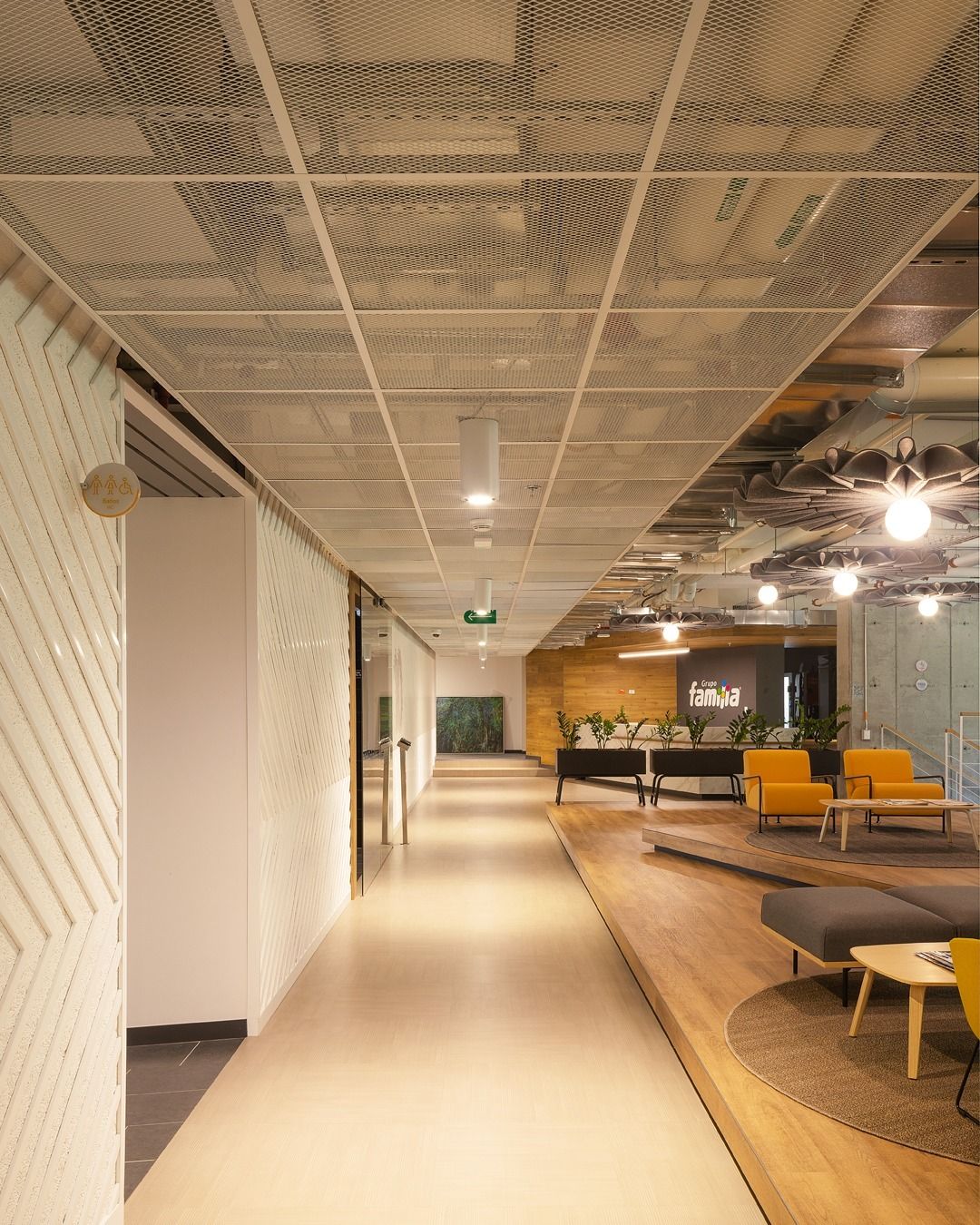
Based on my experience working on luxury office interior projects for many years, I’ve always noticed that blistering of the floor is almost non-existent immediately after completion. In the initial stages of use, the floor usually reaches optimal stability because the material is still “new” and hasn’t been significantly affected by the actual operating environment.
The moisture in the concrete subfloor hasn’t had enough time to permeate back up to the surface. Meanwhile, the expansion due to temperature differences remains within safe limits that the floor structure can absorb. At the same time, the mechanical impacts from high-end furniture or daily traffic are still dispersed. The intensity and frequency haven’t been sufficient to reveal potential weaknesses in the floor system.
The period of 6-12 months is the accumulation phase of mechanical impacts
However, after about 6 to 12 months of operation, mechanical stress begins to accumulate silently. Offices often maintain constant air conditioning, creating repetitive cycles of expansion and contraction that are difficult to perceive with the naked eye. Moisture from the concrete base or from the air gradually penetrates the floor structure. Meanwhile, the long-term pressure from large desks, chairs, and fixed furniture creates persistent stress points. When these factors converge to a certain threshold, the floor will react by bulging or blistering at its weakest points.
Another equally important reason is the lack of regular maintenance. Most businesses, after completing their luxury office spaces, focus on image and operation, paying little attention to periodic inspection and maintenance of the flooring. As a result, the adhesive, locking system, and protective surface gradually degrade over time, reducing moisture resistance and structural stability. This combination of time, environment, and usage habits often leads to noticeable blistering only appearing after about a year, when all the underlying problems have matured enough to become apparent.
>> See more: Applications of wood in luxury office interiors.
=====\
PROCE – TOTAL LUXURY OFFICE SOLUTION
Website: https://proce.vn/
Youtube: https://www.youtube.com/@noithatvanphonghangsang
Fanpage: https://www.facebook.com/vanphongnhapkhauProce
GG Business: https://business.google.com/dashboard/l/15115233216900975876
Linkedin: https://www.linkedin.com/company/74359718/admin/
Hotline: 090.115.6767
#van_phong_hang_sang; #noi_that_van_phong_hang_sang
#thiet_ke_thi_cong_van_phong_hang_sang
#thiet_ke_noi_that_van_phong_hang_sang