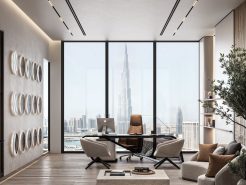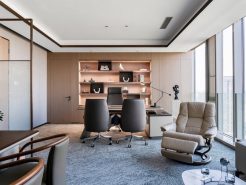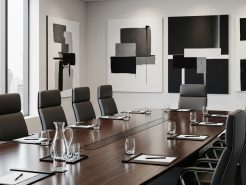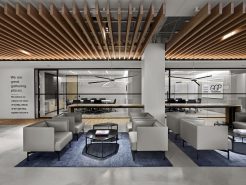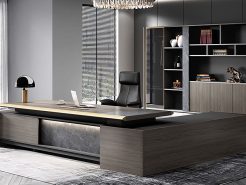
In the design and construction of luxury offices, many businesses invest heavily in lighting, interior design, and technology. However, they often overlook an element that directly impacts employee emotions every day: the flooring material. From a designer’s perspective, I believe that flooring is not just a support for the space; it’s a psychological foundation that subtly regulates people’s mental state. The feeling of stepping on the floor, its softness or firmness, its quietness or resonance… all affect concentration levels, comfort, and even work attitude. A truly luxurious office always begins with these small but enduring emotions, just like the floor itself.
Design and construction of luxury office – The impact of flooring materials on employee mood across various emotional aspects
Visual influence – Spatial perception and mental state
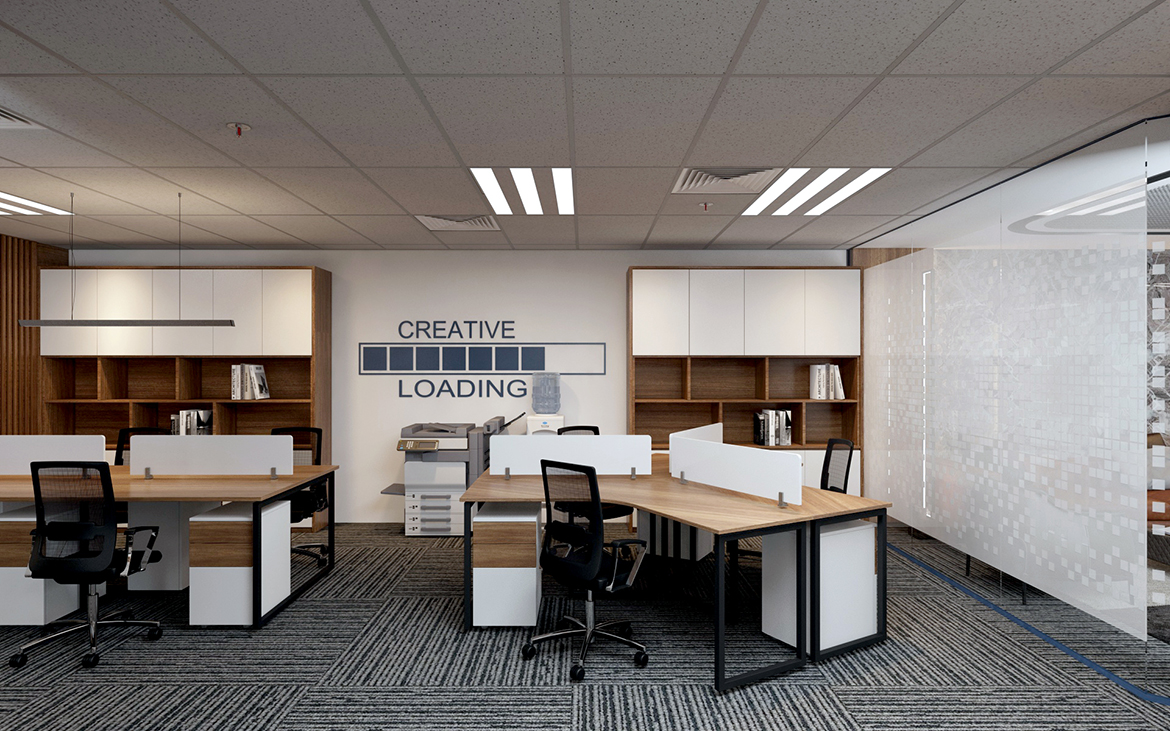
In modern workspaces, flooring materials not only play a fundamental functional role but also directly impact the mood and mental state of employees through visual perception. From the perspective of a designer and researcher of spatial behavior, I always view the floor as a “grounded emotional field” where the brain silently absorbs information throughout the day. This seemingly unconscious layer of perception shapes feelings of comfort or stress throughout the entire workday.
First and foremost, floor color has a strong influence on the perception of space. Light shades like beige, light gray, or light wood make the space feel airy and visually expansive, reducing feelings of confinement and mental pressure. Employees working in such environments tend to be more open, relaxed, and maintain positive energy. Conversely, dark shades like dark brown, dark gray, or black stone create a sense of seriousness, order, and intense focus. However, if overused or with unbalanced lighting, they can easily create a heavy atmosphere, unconsciously “pressuring” the mind.
Visual consistency in the design and construction of luxury office spaces
Besides color, patterns and textures of flooring also play an important role in regulating emotions. Natural wood grain often evokes feelings of warmth, friendliness, and closeness to nature, helping people feel safer and more connected. Meanwhile, smooth, less detailed floor surfaces reduce visual stimulation, allowing the brain to “rest” and maintain sustained focus in tasks requiring deep thinking.
Finally, the visual uniformity of the floor is an often overlooked factor, yet it significantly impacts emotions. A floor fragmented by too many colors or complex patterns can easily cause visual fatigue and distract attention. Conversely, a seamless, consistent floor creates a sense of flow and stability, helping to maintain emotional balance among employees throughout the workday.
>> See more: The Chairman’s Meeting Room – Architect Proce’s Passion for His Profession.
Tactile influence – Body sensations and comfort levels in design and construction of luxury office
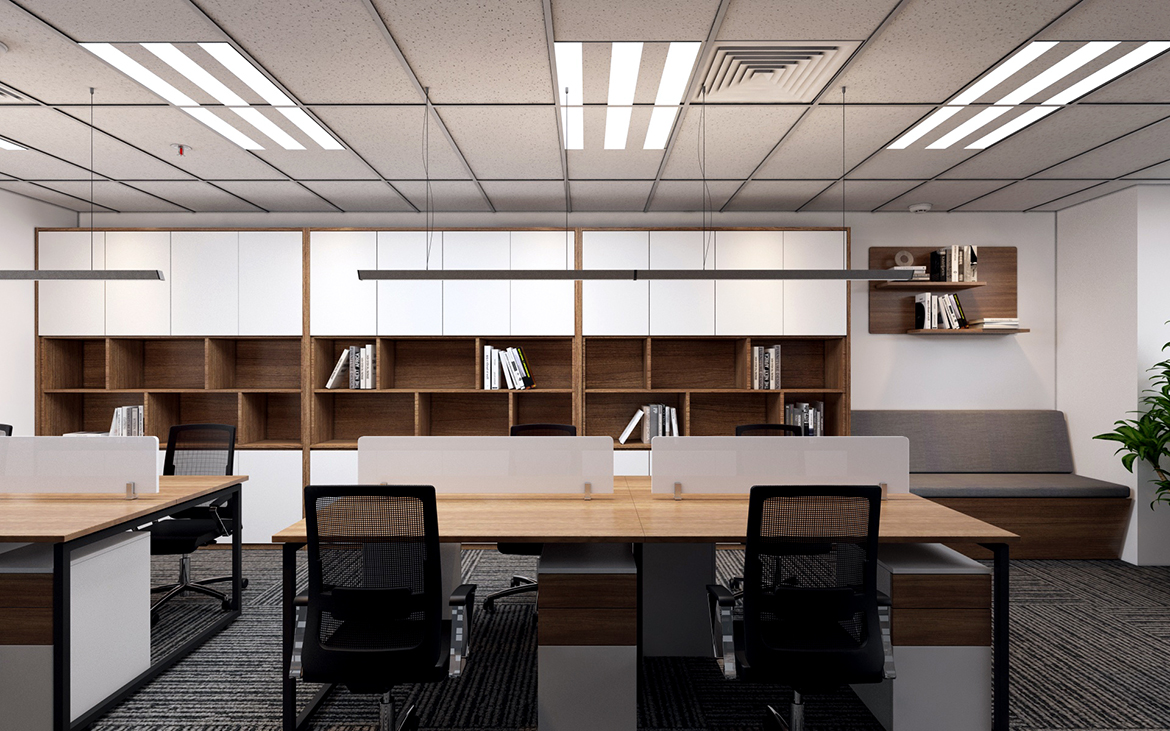
If sight is the first channel of perception, then touch is the most subtle yet persistent factor, impacting employees’ emotional state throughout their workday. I’ve found that the bodily sensation of contact with the floor directly affects comfort levels, thereby influencing psychology, energy, and daily work attitude.
First and foremost, the hardness or softness of the floor is a key factor. Floors that are too hard, like natural stone or ceramic tiles, give a feeling of structural solidity. However, when people have to stand or move around for long periods, pressure builds up on their feet and joints.
This fatigue isn’t just physical; it can easily translate into mental stress, even irritability and impatience. Conversely, materials with moderate elasticity, such as high-quality vinyl or carpets, effectively distribute impact forces, providing the body with a gentle and natural “support.” When the body is under less strain, the mind becomes more relaxed, maintaining a stable and positive work state.
The surface temperature of the floor directly impacts the emotions of the staff
Furthermore, floor surface temperature profoundly affects subconscious emotions. Cold floors often evoke feelings of distance and lack of friendliness, especially in stressful office environments. Conversely, warm floors help employees relax, creating a sense of security and a closer connection to their surroundings.
Finally, the texture and safety of the floor also act as a “psychological shield.” Slippery surfaces create a constant underlying anxiety when moving around. Even small, prolonged anxiety can lead to mental tension. In contrast, a floor with good grip makes each step more secure, instilling confidence and contributing to maintaining emotional balance among employees.
>> See more: Checklist for designing and constructing luxury office walls and floors.
Auditory effects – Noise and mental concentration in the design and construction of luxury office spaces
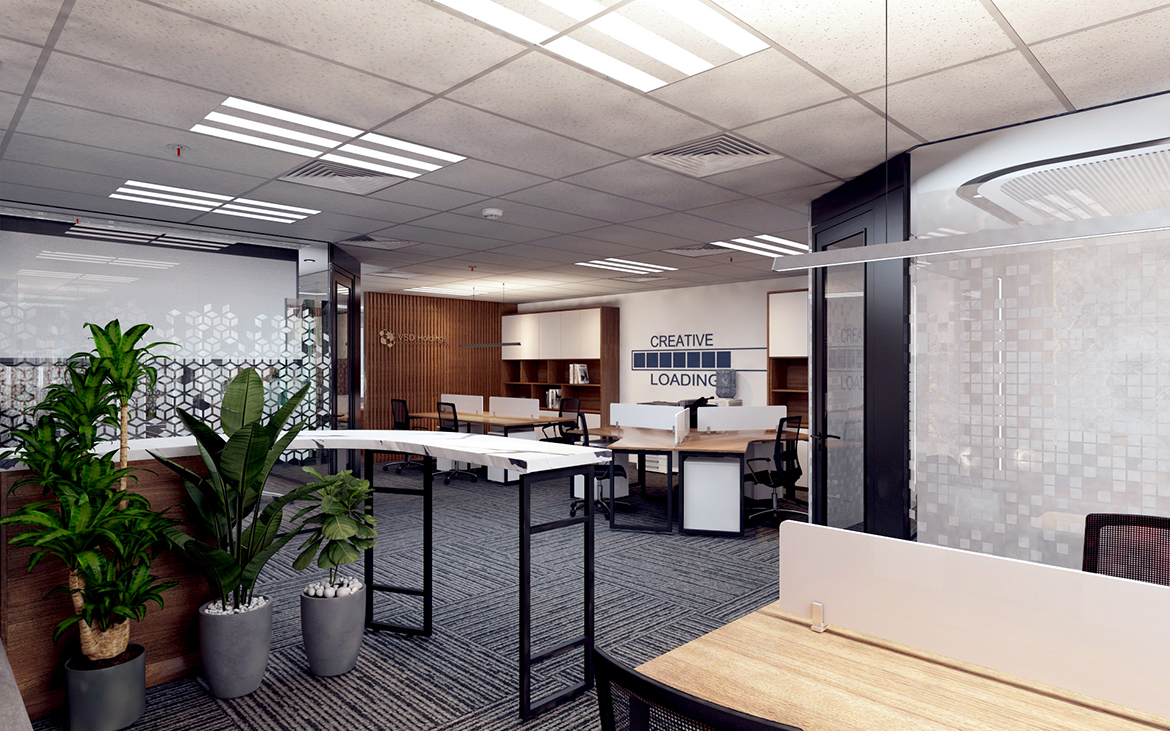
When discussing the influence of flooring materials on human emotions, hearing is often underestimated, yet it has a powerful impact on concentration levels and mental state. Sound emanating from the floor is a fundamental stimulus that the brain constantly receives, even when people don’t consciously pay attention to it.
First and foremost, the sound of footsteps is the most common factor. Flooring with high reverberation and echoes easily causes footsteps to travel far and repeat continuously, especially in open-plan offices. This sound reflection keeps the nervous system in a state of “mild alertness,” eventually leading to stress and difficulty concentrating. Conversely, flooring materials with good sound absorption capabilities help to calm the space, reducing echoes and limiting the intrusion of unnecessary sounds. When the environment becomes quieter, the brain is less negatively stimulated, thus maintaining deep concentration and emotional stability.
Sources of stress for employees
Besides footsteps, repetitive sounds like dragging chairs, pushing tables, or moving objects are also sources of unconscious stress. Although each sound only lasts for a moment, the constant repetition throughout the day disrupts the brain’s thought process, reducing work efficiency and increasing mental fatigue. Spaces with poor soundproofing flooring often make employees more irritable without realizing the real cause.
From an expert’s perspective, soundproof and noise-reducing flooring materials not only solve technical problems but also offer significant emotional value. When sound is controlled, employees feel “protected” from surrounding noise, fostering a sense of security, focus, and increased productivity over extended periods.
Subconscious psychological influence – The feeling of being valued and belonging
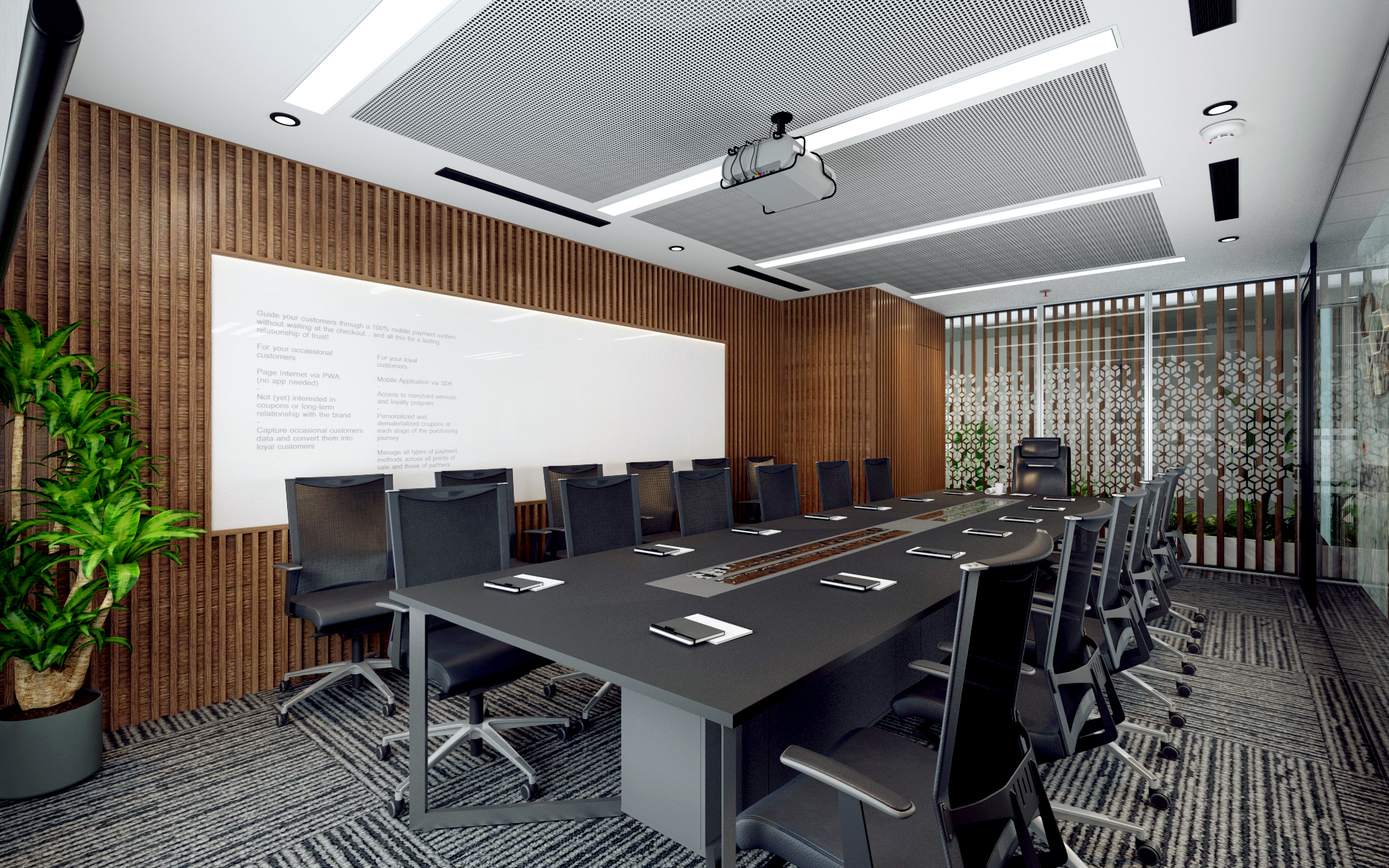
On a deeper emotional level, flooring materials subtly but persistently impact the subconscious psychology of employees, particularly in relation to feelings of being valued and belonging to the organization. From the perspective of a workspace expert, I’ve always believed that flooring is not just a surface to move on, but also a “subtle statement” about the values a company holds for its people.
When a workspace uses carefully selected, meticulously finished, and high-quality flooring materials, employees clearly feel that the company has seriously invested in the work environment. This feeling of being cared for doesn’t need to be explicitly stated, but it quickly sinks into their psychology: “I feel valued here.” Conversely, dilapidated, crumbling, or makeshift floors easily create the impression that the work environment is only short-term, lacking stability and long-term viability. As a result, employees’ sense of security diminishes, leading to a decrease in trust and motivation.
The flooring material also directly affects how people feel about “staying longer” in a space
A pleasant, soft, and inviting floor surface helps employees feel comfortable working for long hours, making the office a place they don’t mind staying in, and even want to return to every day. Conversely, if the floor feels cold or uncomfortable, the desire to leave the space will arise more quickly, even if the work or colleagues are still very good.
From a collective perspective, flooring contributes to a shared emotional effect. Materials that create warmth and intimacy enhance interaction, encouraging cooperation and connection among people. Conversely, floors that are too cold and rigid can inadvertently create “invisible distances,” leading to a fragmented and disconnected collective feeling.
>> See more: Luxury office interiors – Why are floors prone to blistering?
Conclude
From the perspective of someone directly involved in designing and constructing luxury offices. I always consider the flooring material as the “emotional foundation”. That determines the long-term quality of the employee’s work experience. The floor doesn’t speak, it doesn’t show off, yet it’s the surface people interact with most throughout the workday. From the rhythm of morning footsteps and brief exchanges in the hallway to the moment they stand up and leave their desks after work, every emotion is subtly guided by the floor. Choosing the right flooring not only creates a luxurious space but also helps employees feel comfortable, secure, and valued. When this emotional foundation is nurtured sustainably, positive energy and employee engagement will naturally develop.
=====\
PROCE – TOTAL LUXURY OFFICE SOLUTION
Website: https://proce.vn/
Youtube: https://www.youtube.com/@noithatvanphonghangsang
Fanpage: https://www.facebook.com/vanphongnhapkhauProce
GG Business: https://business.google.com/dashboard/l/15115233216900975876
Linkedin: https://www.linkedin.com/company/74359718/admin/
Hotline: 090.115.6767
#van_phong_hang_sang; #noi_that_van_phong_hang_sang
#thiet_ke_thi_cong_van_phong_hang_sang
#thiet_ke_noi_that_van_phong_hang_sang