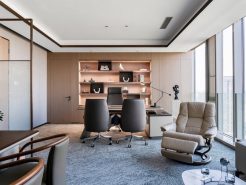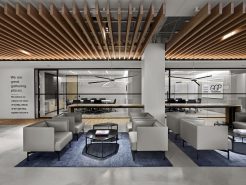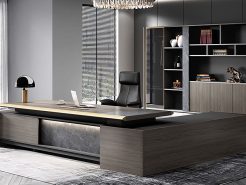

Few people talk about this in the design industry. But I’ve always considered the chairman office the “first draft” of every major decision. A leader can change strategy in minutes. But the space where they sit and think every day is what silently guides those decisions. When a room bears the name of the leader, it transcends the concept of interior design to become a statement about status and leadership thinking. Every wall, light, and material tells a story of vision, discipline, and character. Therefore, designing the chairman’s office is the process of portraying the leader’s image through space—a place where power is subtly expressed.
Why every leader needs a chairman office “named after them”
The chairman office is a tangible representation of “leadership identity”
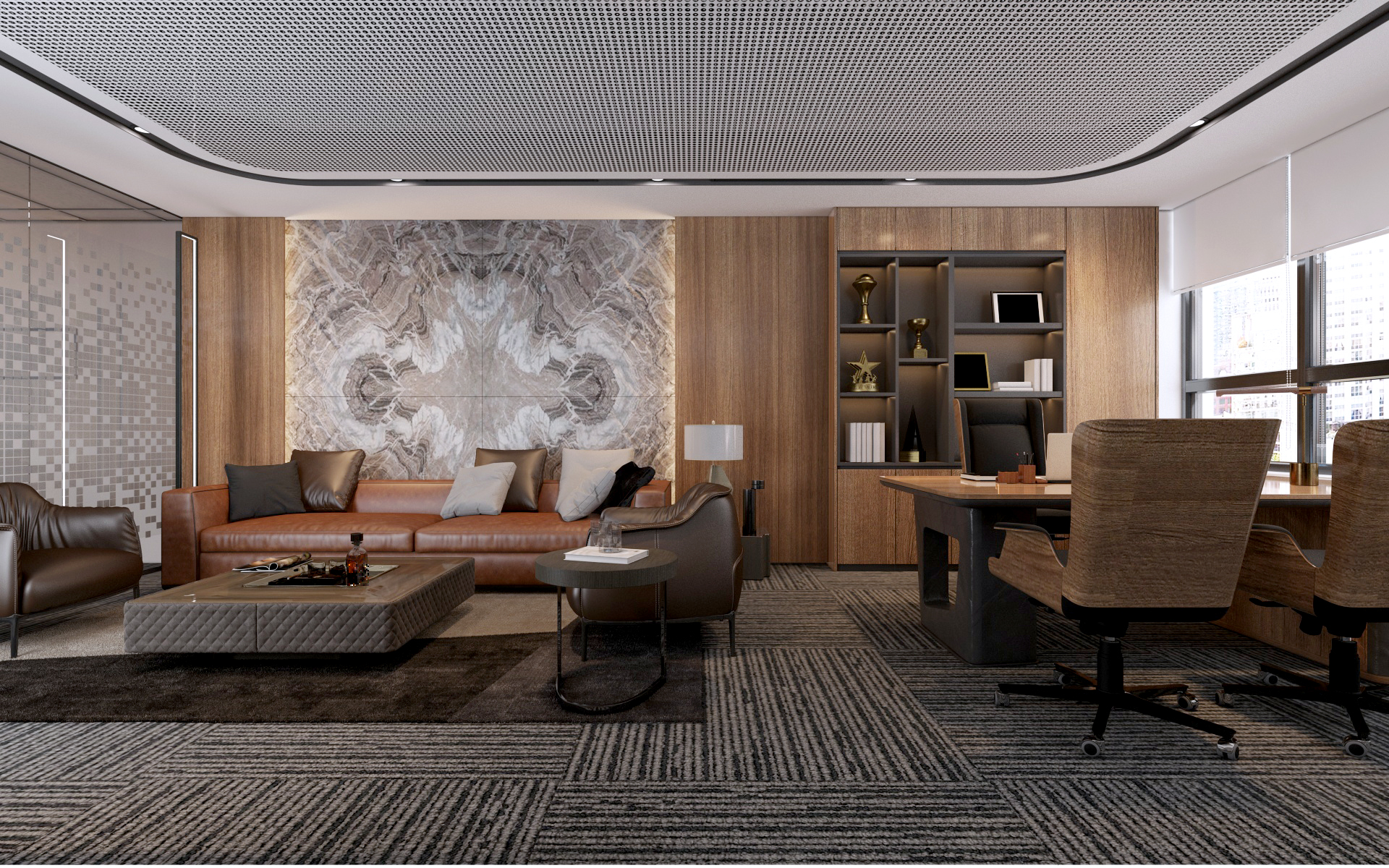
From the perspective of someone with many years of experience in advising on leadership spaces, I’ve always believed that the chairman’s office is the most subtly and authentically embodied “leadership identity.” In it, the space speaks before the person. Just stepping through the doorway, the person can sense the leader’s aura. Decisiveness is expressed through a neat layout and a clear spatial axis. Calmness radiates from carefully calculated lighting and warm, muted colors. Creativity is also encouraged through artistic objects and unconventional details.
Every chair, every wall, every space reflects the management philosophy behind it. Discipline or flexibility, safety or innovation, short-term or long-term strategy. I’ve heard many leaders share that they didn’t need to say much in the first meeting. The room itself “introduced” them in a very convincing way.
Affirming the role of the leader
Furthermore, the concept of a “chairman’s office named after himself” should be understood as a more subtle metaphor than a sign on the door. It’s about designing a space that perfectly matches the temperament, mindset, and leadership style of the leader. When the room truly reflects the leader’s personality, authority doesn’t need to be flaunted; it’s naturally felt. The role doesn’t need to be explicitly stated; it’s clearly present in every detail.
Organizational transparency, the center of strategic decisions, and ultimate responsibility—all are shaped by emotion and how the space is perceived. The office then ceases to be merely an administrative space and becomes a deeply personal imprint. It’s a place where the leader is fully present, leading with charisma, building trust, and establishing leadership order naturally and persuasively.
>> See more: Interior design for the chairman’s office by Proce’s team of carpenters.
The Chairman Office – A Tool for Building Credibility and Soft Power
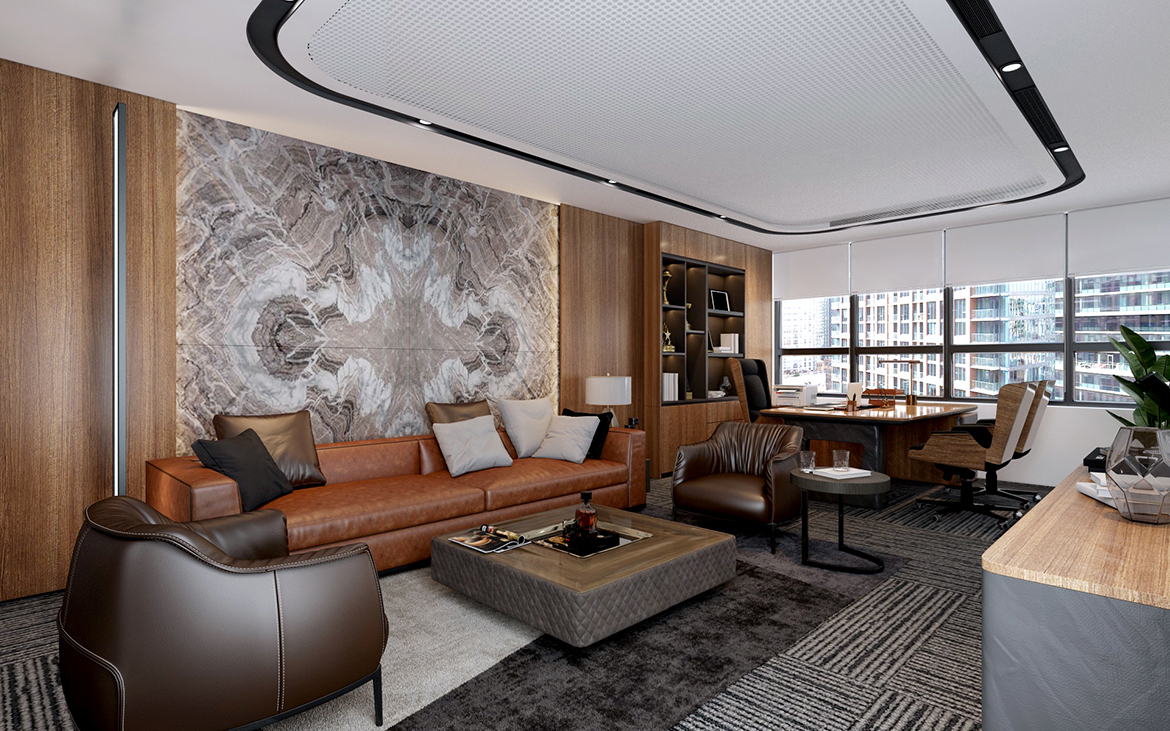
The chairman’s office is not simply a functional space. It is a subtle “lever” that helps build credibility and spread the leader’s soft power throughout the entire corporate ecosystem. The first impression a partner, client, or investor makes upon entering that room often greatly influences their feelings and trust.
A well-invested, luxurious yet understated space, personalized yet professional, will subtly elevate the company’s image in the eyes of those present. Before discussing contracts or strategies, they will sense the stability, professionalism, and long-term vision of the leader. The reality is, people may forget flowery words, but it’s hard to forget the feeling of stepping into a meticulously designed, sophisticated, and uniquely personal executive office.
Increase respect from within the workforce
This workspace not only looks outward but also strongly impacts internal personnel. Employees look to the chairman’s office to sense the leader’s stature and understand that the company has a clear and consistent “axis of power.” When the office accurately reflects the position and role of the leader, seriousness is naturally established, leading to respect without coercion. That’s when power doesn’t come from commands, but is formed from the feelings, beliefs, and silent acknowledgment of the team.
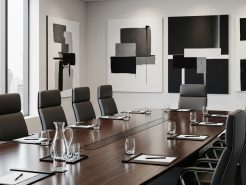
>> See more: The Chairman’s Meeting Room – Architect Proce’s Passion for His Profession.
A private space for leaders to make big decisions
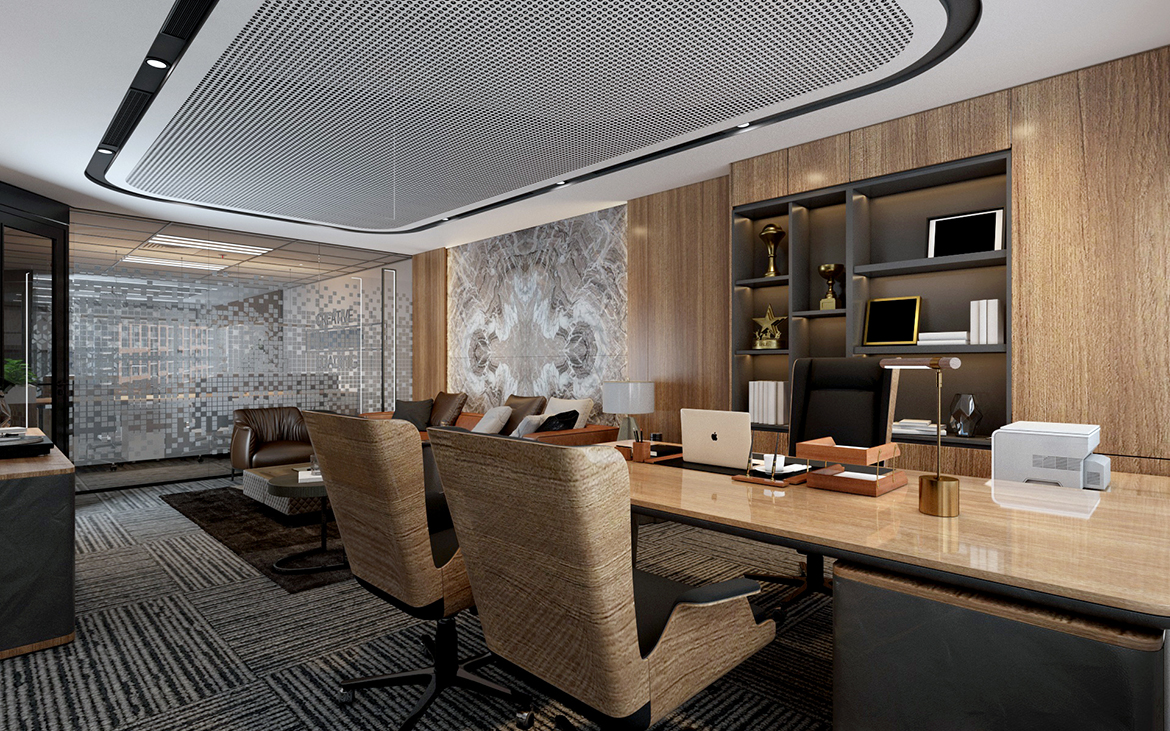
At the deepest level of leadership, the chairman’s office is no longer a place for handling day-to-day affairs. Instead, it becomes a space for strategic thinking and pivotal decisions. Unlike the fast-paced and noisy rhythm of operational departments, this room needs quiet, privacy, and enough depth for the leader to listen to themselves.
In that quietude, numbers transcend their role as reports to become data that helps identify trends. From there, existing problems are viewed as long-term strategic challenges for the entire organization. I always emphasize that a leader of stature needs ample space to cultivate strategic thinking, where trivial distractions are set aside, making way for a focus on vision and long-term development.
Each time a chairman enters that room, they are not just entering a workplace. They are entering a silent commitment to themselves. Every decision made carries weight, leaving no room for superficiality or fleeting emotions. That room both affirms their ego and serves as a persistent reminder that every choice, every consequence, is linked to the reputation, prestige, and leadership legacy of the person at the helm.
The Chairman Office – A Personal Touch and Leadership Legacy
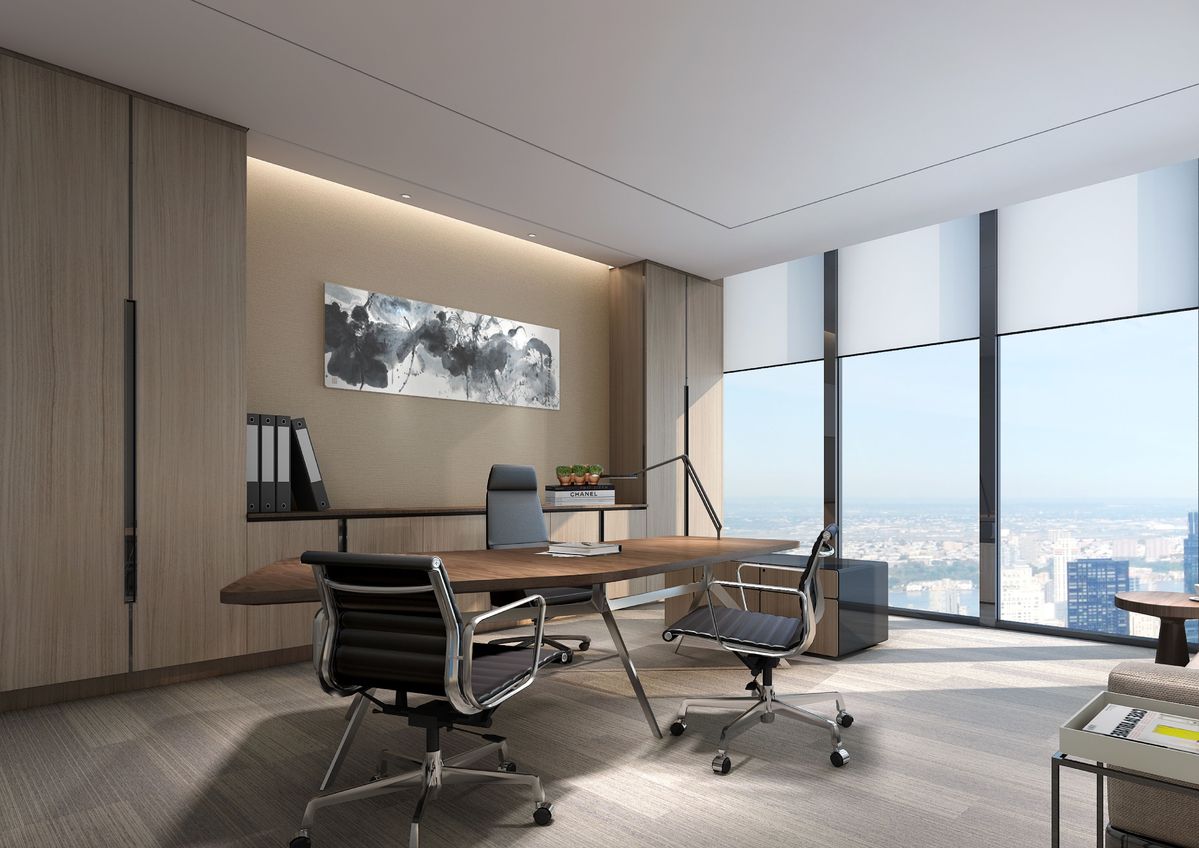
On a deeper level, the chairman’s office is where personal imprints are preserved and the legacy of leadership is gradually formed. When the space is intentionally personalized, it begins to tell the story of the leader without needing explanations. The awards displayed on the wall are not simply achievements, but proof of the challenges overcome.
The books carefully selected for the shelves reflect the leader’s mindset, management philosophy, and worldview. Even a small item connected to the entrepreneurial journey can offer insight into the long path of dedication and perseverance. Every detail carries a personal touch, transforming the room into an inspiring space where others can sense the spirit and motivation that has driven the business to where it is today.
More importantly, the value of the chairman’s office extends beyond a single term. When the successor leader takes over, the space becomes a symbol of continuity, a place where core values are preserved and continued. Corporate culture is therefore not only communicated through words or regulations, but also gradually permeates the space, imagery, and imprint of the leader. A properly invested chairman’s office transcends individual roles, becoming part of the organization’s shared memory and contributing to shaping the long-term corporate identity.
>> See more: The secret to making Proce’s president’s office truly unique.
Conclude
After years of designing spaces for leaders, I’ve realized that the chairman office is not just a place where they make decisions. It’s the leader’s spiritual “energy station.” Every detail, from lighting and materials to layout and even the smallest items, contributes to shaping their thinking, focusing their abilities, and reinforcing their soft power. When the room “bears their name,” it becomes a unique mark, creating credibility in the eyes of partners and respect from employees. This space is where strategic decisions are formed. It’s where leaders meet with themselves to chart the future. Designing a chairman’s office, therefore, is about creating a “leadership space” that is both practical and spiritual.
PROCE – TOTAL LUXURY OFFICE SOLUTION
Website: https://proce.vn/
Youtube: https://www.youtube.com/@noithatvanphonghangsang
Fanpage: https://www.facebook.com/vanphongnhapkhauProce
GG Business: https://business.google.com/dashboard/l/15115233216900975876
Linkedin: https://www.linkedin.com/company/74359718/admin/
Hotline: 090.115.6767
#phong_lam_viec_chu_tich; #phong_chu_tịch; #thiet_ke_phong_lam_viec_chu_tich
#noi_that_phong_lam_viec_chu_tich; #thiet_ke_noi_that_phong_lam_viec_chu_tich
#phong_lam_viec_chu_tich_chuan_sang; #phong_lam_viec_chu_tich_dang_cap