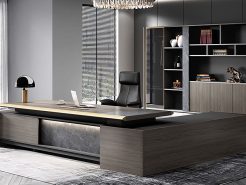

There’s a small detail I always notice when I enter the chairman office of a company. The feeling of stability. Top leaders almost never work in a makeshift space, even if it’s temporary. For them, the office isn’t just a place to “put down a desk and chairs,” but a psychological anchor for long-term decisions. A patchwork space pulls thinking back to the short-term present, while top leaders always live in the future they are creating. That’s why the design of the chairman’s office doesn’t start with aesthetics, but with the question: how far will the person sitting here lead this organization?
Explaining why leaders don’t work in makeshift chairman office
The chairman office is a decision-making “ecosystem”

A senior executive’s office is never just “a room.” From the perspective of a professional designer, it’s a decision-making ecosystem, where every spatial element subtly impacts the quality of thinking, the speed of analysis, and the accuracy of each strategic choice.
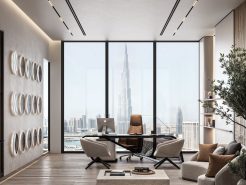
First and foremost is lighting. The lighting in the chairman’s office isn’t simply about “sufficient brightness.” It must be carefully controlled in terms of direction, intensity, and rhythm throughout the day. Incorrect lighting causes brain strain, reduces concentration, and leads to hasty or emotional decisions. Conversely, proper lighting helps the brain maintain alertness, endurance, and sharpness for hours on end. Next is visibility. An effective leadership space always has an open view. Not just looking outward, but feeling unrestricted. An unobstructed view fosters open thinking, avoiding short-sighted and closed-minded decisions. Leaders need to see the “big picture” even when sitting still.
Sound and movement are equally important
A makeshift office often allows noise to intrude and creates overlapping traffic flows, constantly interrupting brain activity. In contrast, a properly designed executive office controls acoustics and traffic flow, creating a seamless environment for strategic thinking. A leader’s decisions affect thousands, even millions, of people. A workspace that hinders brain performance is unacceptable. A confined space leads to ineffective decisions, and in a leadership role, that’s an unpayable price.
>> See more: Color trends for the president’s office interior in 2026.
The chairman office is the “non-verbal language” of power

The chairman’s office doesn’t need to speak, but it speaks volumes. The moment someone enters that space, they begin to “read” the leader’s position—from their level of stability and the depth of their power to their vision for the entire organization. Great leaders understand that power doesn’t wait to be spoken in a meeting room; it’s felt beforehand, intuitively and emotionally.
From there, the entire design of the chairman’s office became a sophisticated system of symbols. High ceilings not only create a sense of spaciousness but also subtly affirm a long-term vision and comprehensive capabilities. Low ceilings, if not intentionally designed, can easily diminish the feeling of status and control. The distance between the desk and chair is also not random. It establishes power boundaries, creates focus, and defines the role of the decision-maker.
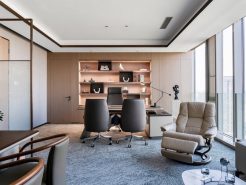
Materials continue to tell that story through emotion. Wood evokes a sense of durability and legacy, while stone represents a solid foundation. Metal conveys strength and decisiveness, and glass suggests transparency and modernity. When these elements are placed correctly, the space doesn’t need to be ostentatious to convey a sense of profound power.
A makeshift chairman’s office inadvertently signals instability and an organization that is not truly “settled.” Great leaders understand this: they would never allow partners, investors, or senior staff into a space that shakes trust at first glance.
Great leaders don’t think in the short term
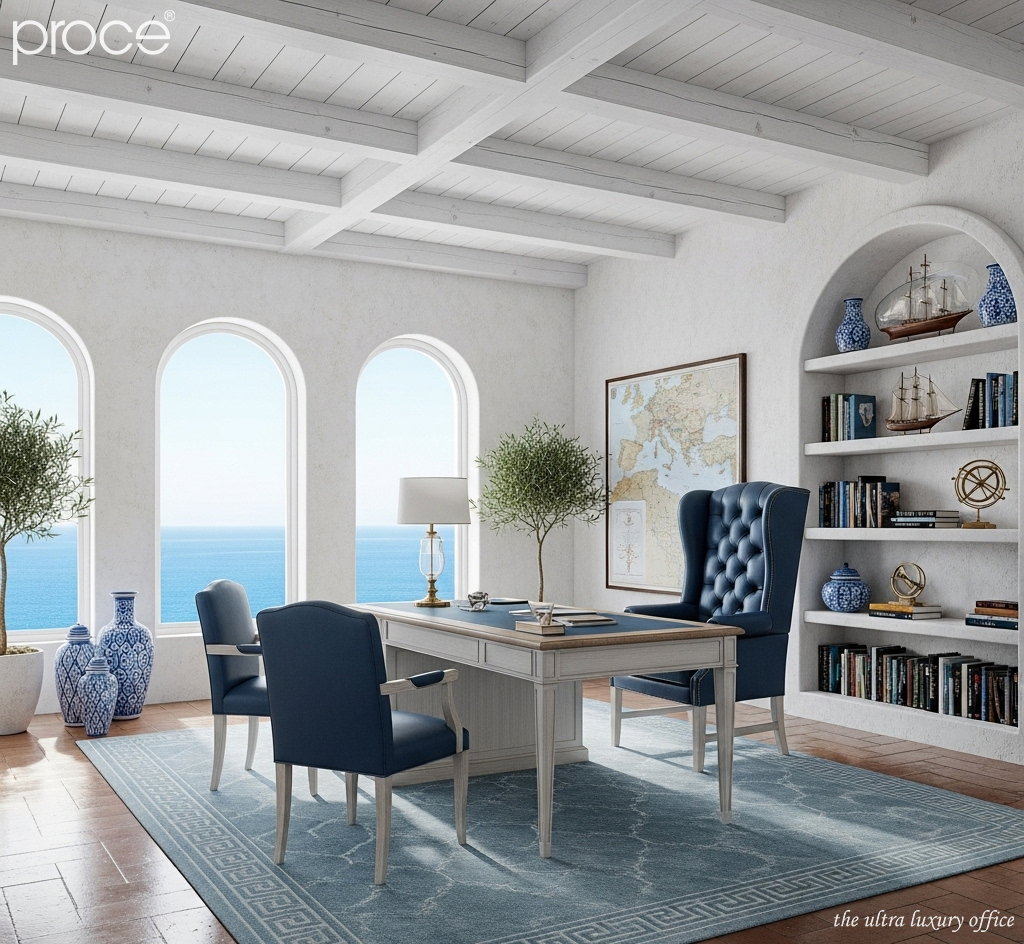
Great leaders never think in terms of “temporaries.” And that’s clearly reflected in their daily workspace. The chairman’s office is not just a place for administrative work; it’s the center of decisions that shape the future. From developing five-year growth plans and considering M&A deals to handling the organization’s most stressful crisis moments, every detail of the space subtly influences how the leader thinks and acts.
A poorly designed workspace often reflects short-sighted thinking
When a workspace lacks serious investment, the brain easily falls into a “get it over with” state, prioritizing reactive rather than constructive action. This makeshift approach also reveals something deeper: the leader is not truly committed to their role and has not placed themselves in the long-term perspective the organization is aiming for.
Conversely, top leaders always view the chairman’s office as a strategic tool. The space is designed to support long-term thinking, helping them maintain composure when making major decisions and clarity when facing risks. A clear layout, durable materials, and a sense of stability and consistency create a solid psychological foundation where leaders can think beyond immediate pressures.
The core difference lies in this: great leaders don’t design spaces for the people of the present, but for the future version they are building. The chairman’s office, therefore, is not merely a temporary residence, but a silent affirmation of the vision, commitment, and long-term journey of the leader.
>> See more: Designing the chairman’s office – When the leader sketches out the ideas themselves.
The chairman office is a tool for controlling energy and mindset
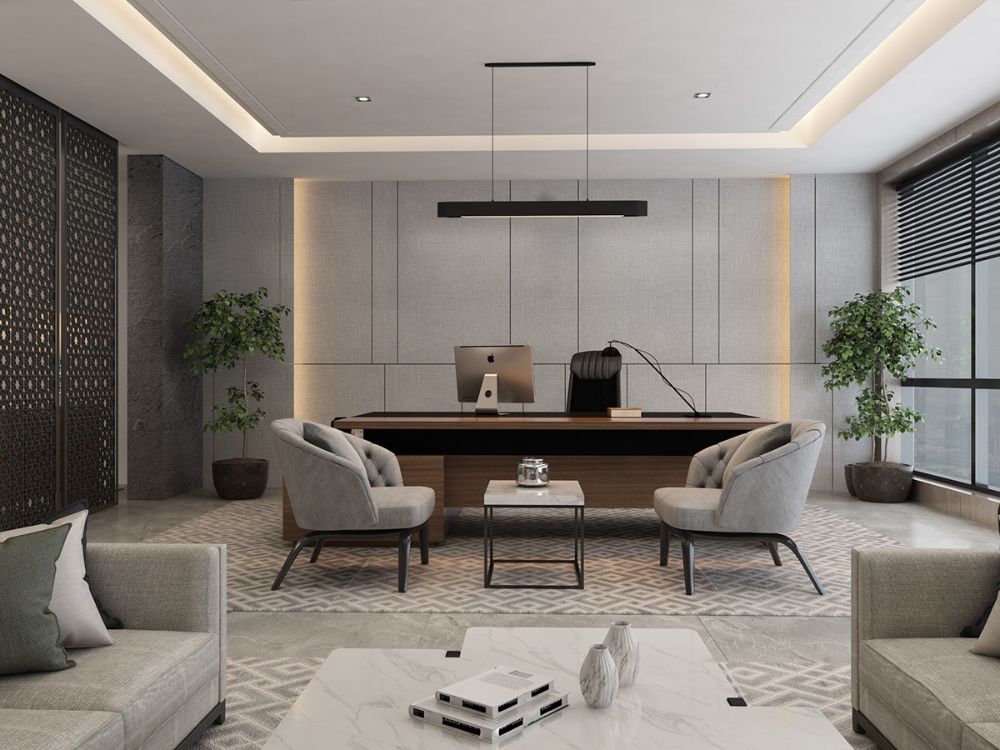
The chairman’s office is not simply a place to handle work. It’s a sophisticated tool for maintaining leadership, a place where the mindset and energy of the leader are proactively controlled. Every element in the space, from color and seating orientation to the layout and privacy, directly impacts emotions, concentration, and confidence when making important decisions.
The colors in the chairman office are not simply an aesthetic element
Warm, soothing tones help relax the brain and maintain sustained focus, while subtle accents provide decisive energy, sparking creativity and proactive action. Seating position is also an invisible tool of power. A favorable position provides a sense of control over the space, reducing pressure during crises or difficult conversations. A private, cleverly separated space allows leaders to think deeply and analyze strategies without interruption. This is the “leadership zone” that everyone entering should feel.
Conversely, a makeshift room is often easily intrusive, lacks clear zoning, and fails to create a psychologically focused environment. In such an environment, the brain is constantly distracted, energy is depleted, and the sense of authority can be diminished through even simple interactions.
A great leader knows that to maintain composure during a crisis, stay focused under high pressure, and uphold authority in difficult dialogues, the workspace must be designed as a tool to support mental well-being and energy. The chairman’s office, therefore, becomes a place that naturally and effectively coordinates the leader’s energy, mindset, and authority.
The chairman office is the first thing employees observe, and they don’t say anything about it
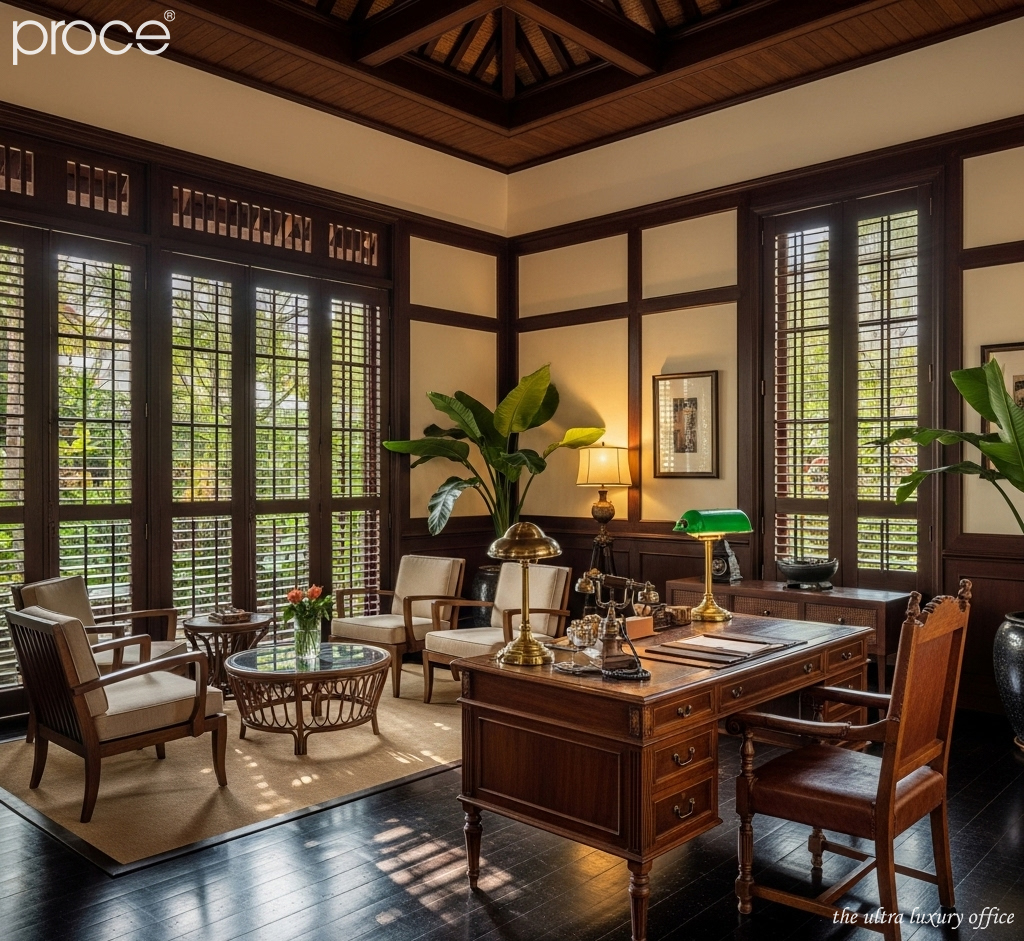
This is a space where employees observe more than they listen. Before any words are spoken, they have already read the leader’s status, vision, and style through the surrounding space. From the ceiling, lighting, and materials, to the arrangement of desks and chairs and the spaces within the room, the space becomes a silent language, conveying a powerful message about the organization’s stability, commitment, and values.
A makeshift office, whether intentionally or due to limitations, often sends negative signals. Employees walk in and sense a lack of investment and a haphazard layout. These details make it difficult for them to envision the stature of the leadership. This leads to a lack of confidence and a feeling that the organization has not yet defined its long-term direction. As a result, the work culture is affected, employees act cautiously and hesitantly, and strategic thinking is difficult to disseminate.
Conversely, a well-designed executive office not only ensures aesthetics and convenience but also shapes emotions and trust. An open space, appropriate lighting, sustainable materials, and carefully considered layout create a “safe zone” for the leader. At the same time, it sends a clear message to employees: this is where future decisions are made, where commitment and vision are nurtured. Upon entering, employees feel a sense of stability and confidence in the long-term direction, and easily integrate into the organizational culture that the leader is building. The executive office thus becomes a “silent mirror” reflecting the culture and core values of the entire company.
>> See more: When is the best time to upgrade the chairman’s office?
Conclude
The chairman’s office is the decision-making center, where the organization’s energy, vision, and power converge. Top leaders understand that a makeshift space easily leads to short-term decisions, reducing clarity and effectiveness. Therefore, they do not tolerate sloppiness in this most important area. The design of the chairman’s office must combine aesthetics, comfort, and strategic depth, transforming the space into a tool for elevating leadership. If you want to create a chairman’s office that fosters true leadership power, Proce is pleased to be your design partner, delivering a space that is both aesthetically pleasing and strategic, where every decision is elevated.
=====\
PROCE – TOTAL LUXURY OFFICE SOLUTION
Website: https://proce.vn/
Youtube: https://www.youtube.com/@noithatvanphonghangsang
Fanpage: https://www.facebook.com/vanphongnhapkhauProce
GG Business: https://business.google.com/dashboard/l/15115233216900975876
Linkedin: https://www.linkedin.com/company/74359718/admin/
Hotline: 090.115.6767
#phong_chu_tich; #phong_lam_viec_chu_tich; #phong_chu_tich_chuan_sang
#phong_chu_tich_dang_cap; #noi_that_phong_chu_tich
#thiet_ke_phong_chu_tich