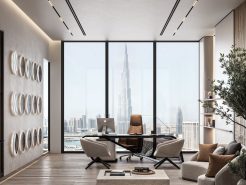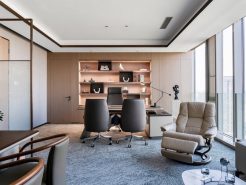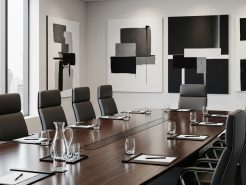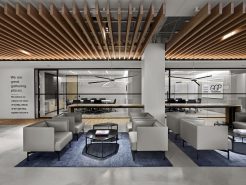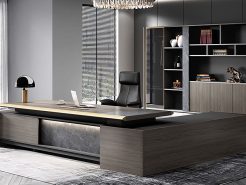

Over the years, I’ve realized that designing the chairman office is never just about furniture, materials, or perfect blueprints. It’s a silent dialogue between space and power, where every detail carries a purpose that outsiders can hardly recognize. There are principles I don’t include in the design documents. There are decisions made after only a very short conversation with the head of the company. Proce calls this the “secret zone” of the project, where aesthetics stop and strategic thinking begins. A true chairman’s office doesn’t need to be ostentatious, but it always prompts those who enter to adjust their posture, voice, and even their thoughts.
The secrets Proce keeps hidden in designing the chairman office projects
Designing the chairman office doesn’t start with the space
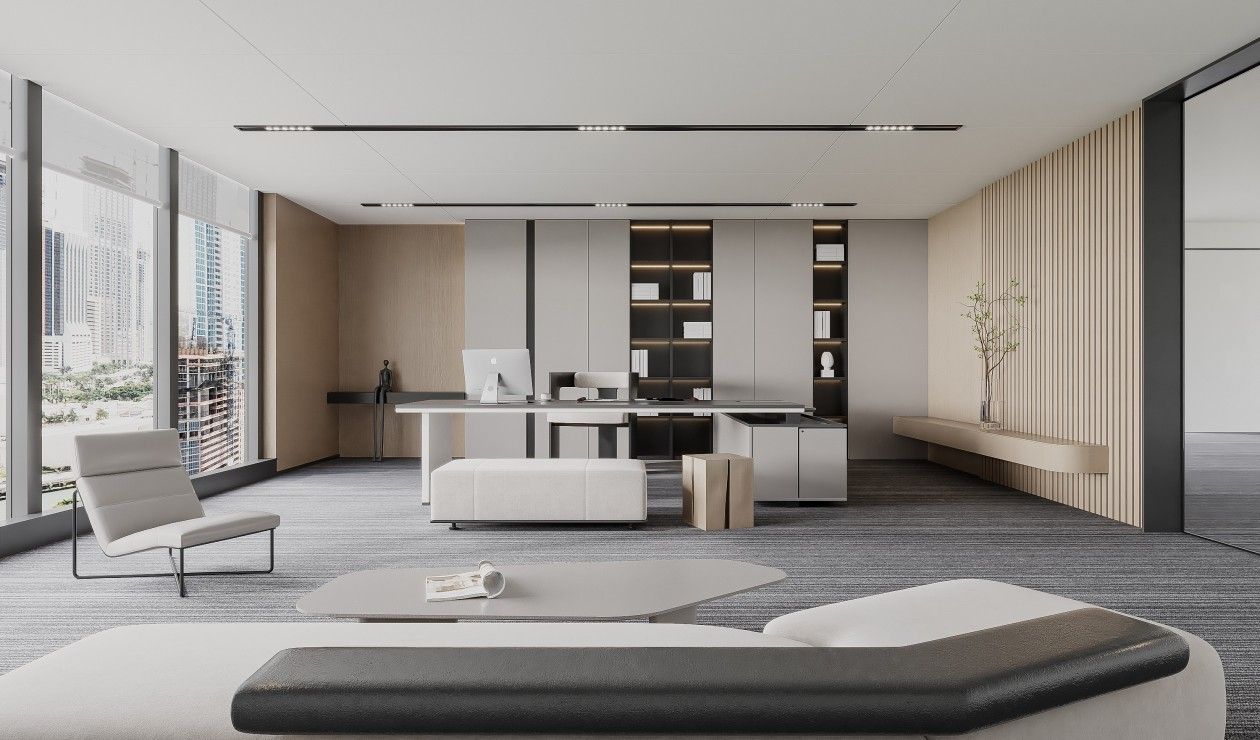
For Proce, a truly effective chairman’s office isn’t born from trends. Nor is it a copy of any prevailing leadership archetype in the market. Trends may create a fleeting impression, but lasting power never comes from fads. It comes from understanding.
A portrait of the president’s power
The core of the design lies at a starting point few see: the powerful persona of the chairman himself. Before putting pen to paper, Proce spent a significant amount of time studying the people who would live, work, and make important decisions in that space every day. It was a process of deciphering leadership characteristics, from decisiveness and creative tendencies to long-term strategic thinking. Every nuance of personality, however subtle, subtly shaped the spatial language behind it.
Beyond personality, the leadership style is also meticulously analyzed. Is the chairman reserved or outgoing, valuing tradition or always embracing innovation? What is the workflow like? Does the space need to accommodate continuous client meetings and strategic briefings, or moments of quiet reflection for decision-making? These questions don’t appear in the technical specifications, but they determine every detail of the design.
Therefore, for Proce, the initial design wasn’t about layout, materials, or colors. It was a profile analyzing the people involved. Where power, mindset, and leadership qualities are transformed into the language of space. When people are placed at the center, the chairman’s office is not only aesthetically pleasing but also becomes a solid foundation for thought-provoking ideas and leadership decisions.
Proce always designs with a “mindset” in mind before designing the interior
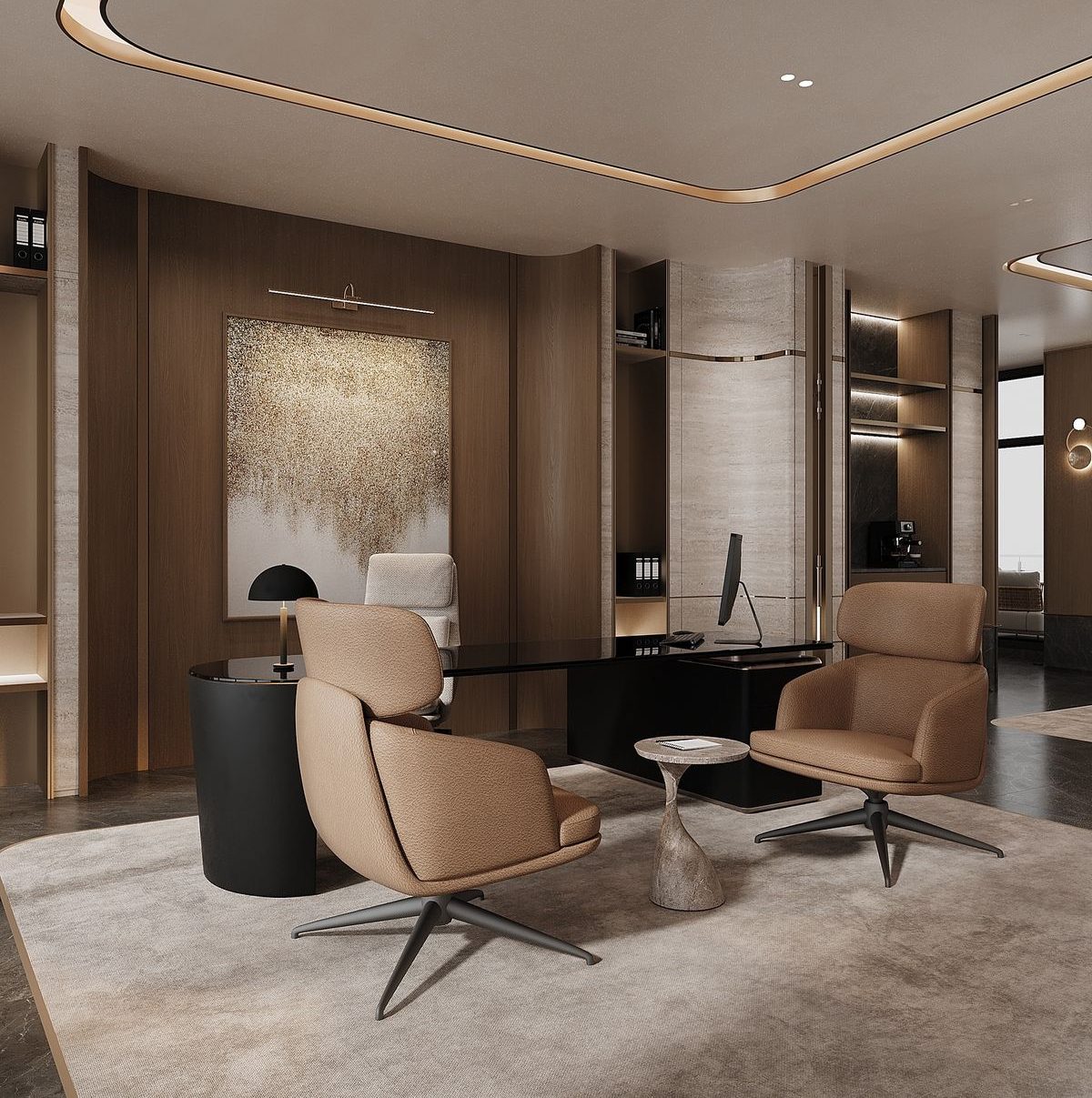
The second thing Proce always prioritizes in every design is creating a positive mindset before even considering the interior. For Proce, the chairman’s office isn’t a place to show off luxury or display aesthetic taste. It’s a space where the most important decisions are made. There, every design choice subtly serves the mental state of the person sitting in the room, rather than aiming for a superficial impression.
The secret lies in understanding the impact of space on emotions. Lighting isn’t just for visibility; it’s for maintaining alertness and focus. Room proportions aren’t merely technical specifications; they represent a sense of control and mastery. Ceiling height, spatial openness, setbacks between areas… everything is calculated to ensure the chairman is always in a proactive position, whether working alone or conversing with important partners.
The secret lies in controlling emotions in designing the chairman office
An overly ostentatious space can easily create pressure. An overly closed space, on the other hand, can diminish leadership energy. Therefore, Proce sought a delicate yet decisive balance—a place where power doesn’t need to be strained to be displayed, but is naturally present.
Most importantly, it’s the ability to control emotions—something intangible yet powerfully influencing all decisions. When sitting at their desk, a chairman needs to feel secure to think clearly, without being distracted or anxious. When meeting with partners, the space must help them maintain a proactive and confident stance without ostentatious displays of power. And when others enter that room, they naturally adjust their attitude: speaking more slowly, thinking more carefully, and becoming more aware of their position in the conversation.
Therefore, a proper chairman’s office doesn’t need to be overly ornate. It doesn’t need to be overwhelming, but it’s powerful enough to inspire respect from the very first moment. It’s a space that’s not only visible, but also felt, reflecting the mindset of a leader and worthy of the decisions made there.
>> See more: 13 ideas for designing a luxurious and modern executive office.
Designing the chairman office doesn’t mean using the most luxurious materials possible
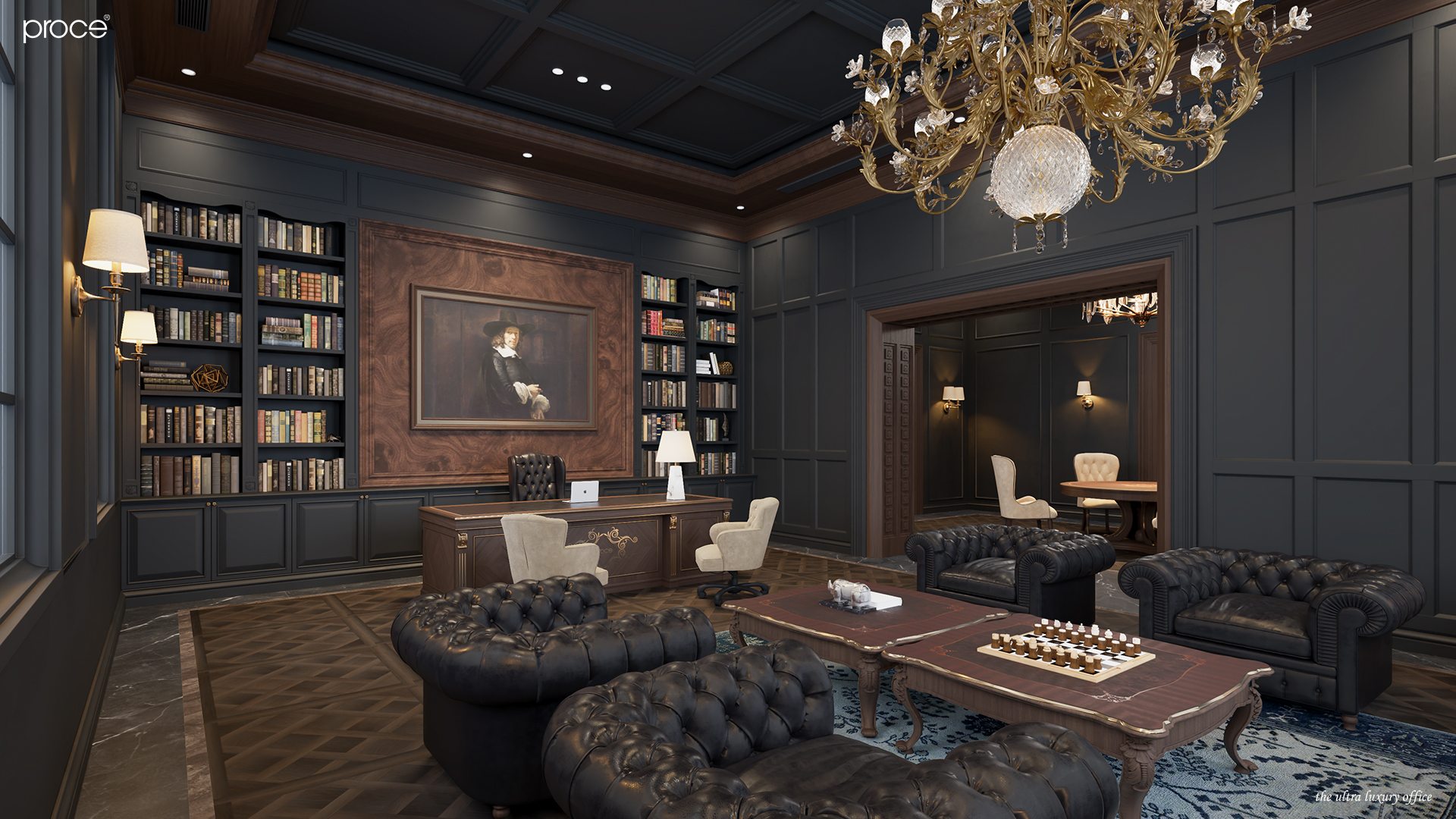
The third thing Proce absolutely believed in was that materials weren’t meant to be overwhelming. In a chairman’s office, what defines class isn’t how much expensive material is used, but the ability to choose the right amount and use just enough. Proce wasn’t looking for ostentation. He was looking for harmony between the materials and the leadership spirit.
Each material has its own voice, and the designer’s task is to listen to it. Wood conveys warmth and stability. But not all types of wood tell the same story. Some evoke a sense of durability and tranquility, like a solid foundation for long-term decisions. Others are lighter and more delicate, suggesting the flexibility and soft power of a modern leader. Stone, on the other hand, is not only present in terms of mass but also in feeling. Sharp veins show steadfastness and solidity, while gently moving lines create a rhythm, preventing the space from feeling rigid or imposing.
In Proce’s philosophy, metal is never the main character. It appears as a well-placed punctuation mark. Enough to assert authority, enough to create the right emphasis. And it disappears before becoming ostentatious. This restraint is not due to timidity, but to a clear understanding of the weight of each detail.
Secrets are deliberate restraint
The more sophisticated a chairman’s office becomes, the less it needs to be spoken of. The space avoids visual noise and emotional imposition, yet it naturally evokes a sense of order, stability, and depth. Every material is present for a reason. And it is this deliberate silence that is the most powerful statement of authority.
>> See more: Interior of the chairman’s office – The desk that has served three terms.
Proce always kept the design details secret, only the chairman knew them
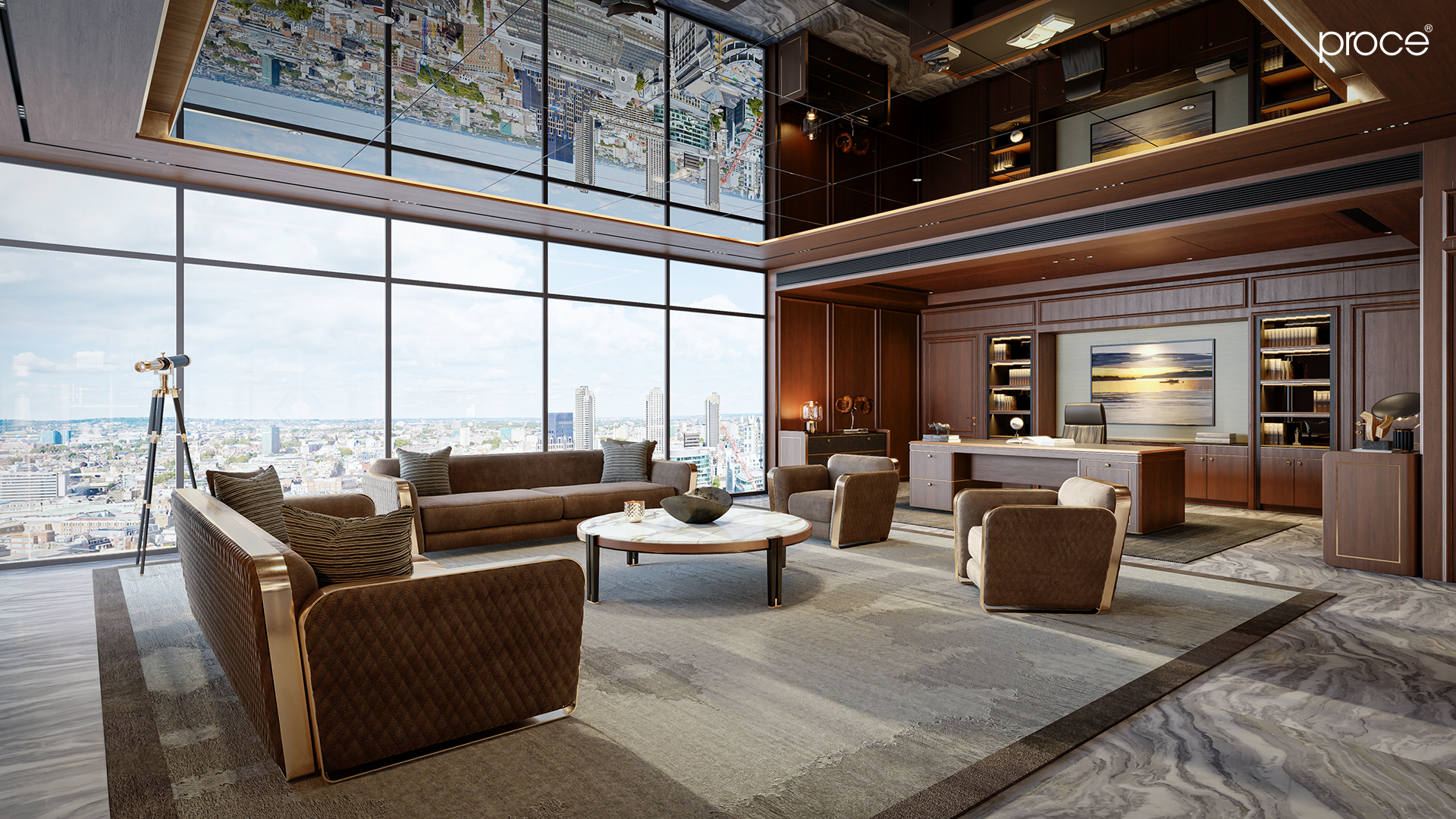
The fourth principle in Proce’s design philosophy lies not in what is visible, but in what is deliberately concealed. When power is great enough, it doesn’t need to be visible from every angle. Instead, privacy becomes a subtle luxury, reserved only for the person who truly owns the space. Proce understood that the chairman’s office is not just a workspace, but also a place where the leader can be alone, without roles, without gazes, without the pressure of performance.
The privacy behind power in designing the chairman office
Therefore, every design always contains details not meant for outsiders. This could be a cabinet completely hidden within the wall system, only opening when needed and disappearing immediately afterward. It could be a private passageway, allowing the chairman to enter or leave the room without interruption from schedules or unnecessary attention. Or it could be a personal relaxation corner, a place not seen in any media images, but playing a crucial role in balancing energy and emotions.
These details weren’t created to arouse curiosity, but to protect concentration. Because behind the highest position always lie very private moments. When the chairman sits alone with numbers, difficult choices, and decisions that can affect an entire organization. The space doesn’t need to be beautiful to look at, but private enough for reflection, safe enough to slow down and breathe.
Proce didn’t design privacy as a cover, but as an essential part of enduring power. When all eyes are fixed on the outside, the room offers the necessary stillness for deep thought. And it is there, in the details known only to the chairman, that the space fulfills its greatest role: becoming a silent anchor for decisions that cannot afford to go wrong.
Proce always kept the relationship between feng shui and strategy a secret
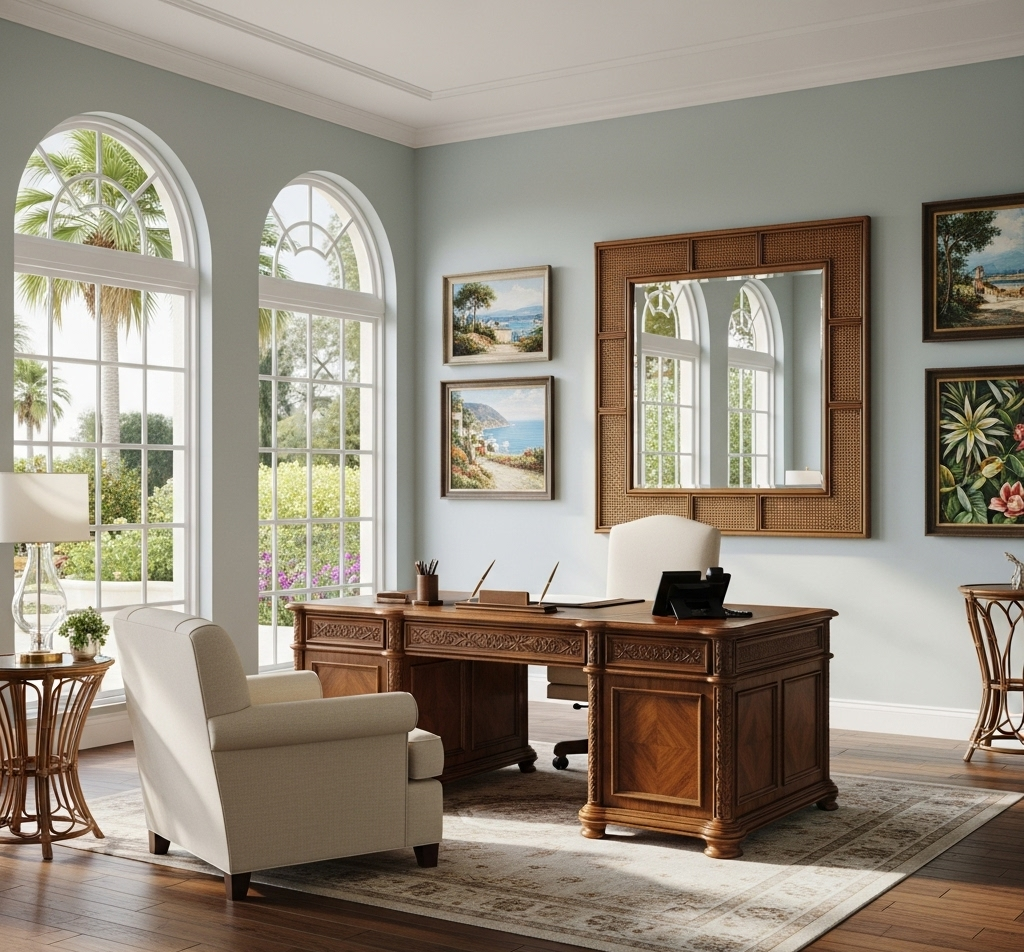
In Proce’s approach, feng shui is not superstition or sentimentality. Rather, it is an ancient science about how energy flows in space and how people react to it. When energy is properly guided, thinking becomes clearer, emotions are more stable, and decisions are consequently more accurate.
Proce viewed the space as a strategic map. The orientation of the desk wasn’t simply for aesthetics, but to ensure the chairman was always in control. This allowed for a holistic view, preventing distractions and avoiding a passive position. The eye-tracking axis was carefully calculated to guide the gaze in the right direction, creating a sense of initiative and focus. The seating position relative to the entrance, natural light, and any obstructing walls all directly impacted the feeling of security—a fundamental element in making major decisions.
Proce doesn’t talk much about feng shui, but he always applies it
What’s remarkable is that Proce rarely talks much about feng shui with clients. Not because they disregard it, but because they understand that the chairman’s office isn’t a place for experimentation or gradual adjustments over time. Every choice must be right from the start, precise and well-founded. Feng shui, in this case, isn’t just an added decorative element, but is completely integrated into the design strategy.
When everything runs smoothly, users don’t need to know the terminology or principles behind it. They just feel one thing very clearly: that space is “right.” Right for deep thinking, right for making decisions. And right for carrying out grand strategies without any room for error.
>> See more: Why choose Proce for your executive office design?
Conclude
Ultimately, the designing the chairman office leaves an impression not through visuals, but through lasting impact. A truly well-designed space subtly regulates the rhythm of thought, forcing the occupant to slow down, consider things more carefully, and take greater responsibility. As a professional, I don’t believe in “perfect” offices. I believe in offices with purpose—intention in every space, every hidden corner, every calculated silence. Proce always chose to keep these things secret, because true power needs no explanation. When a major decision is made and no one remembers why they were so certain, that’s when the space has fulfilled its purpose.
=====\
PROCE – TOTAL LUXURY OFFICE SOLUTION
Website: https://proce.vn/
Youtube: https://www.youtube.com/@noithatvanphonghangsang
Fanpage: https://www.facebook.com/vanphongnhapkhauProce
GG Business: https://business.google.com/dashboard/l/15115233216900975876
Linkedin: https://www.linkedin.com/company/74359718/admin/
Hotline: 090.115.6767
#thiet_ke_phong_chu_tịch; thiet_ke_phong_chu_tich_chuan_sang;
#thiet_ke_noi_that_phong_chu_tich; #thiet_ke_phong_chu_tich_dang_cap
#noi_that_trong_thiet_ke_phong_chu_tich; Proce_thiet_ke_phong_chu_tich
#thiet_ke_phong_chu_tich_chat