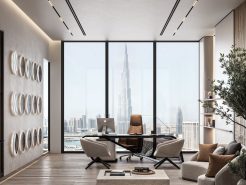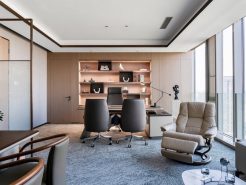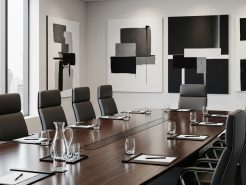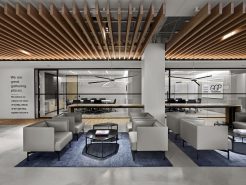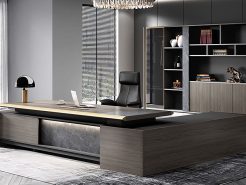

The chairman office is a place where introductions are unnecessary. Everything is already said through the materials themselves: the coolness of metal, the stability of wood, the just-right weight of stone as light touches it. A properly designed president’s office doesn’t try to impress, but creates a weighty silence. It’s a place where the person facing it adjusts their tone, thought process, and even attitude. Here, the art of mixing contrasting materials is no longer a matter of aesthetics, but a sophisticated arrangement of power: opposition for control, difference for balance. And it is this balance that is the hallmark of a leader at the highest level.
1. The philosophy of contrast in leadership space design
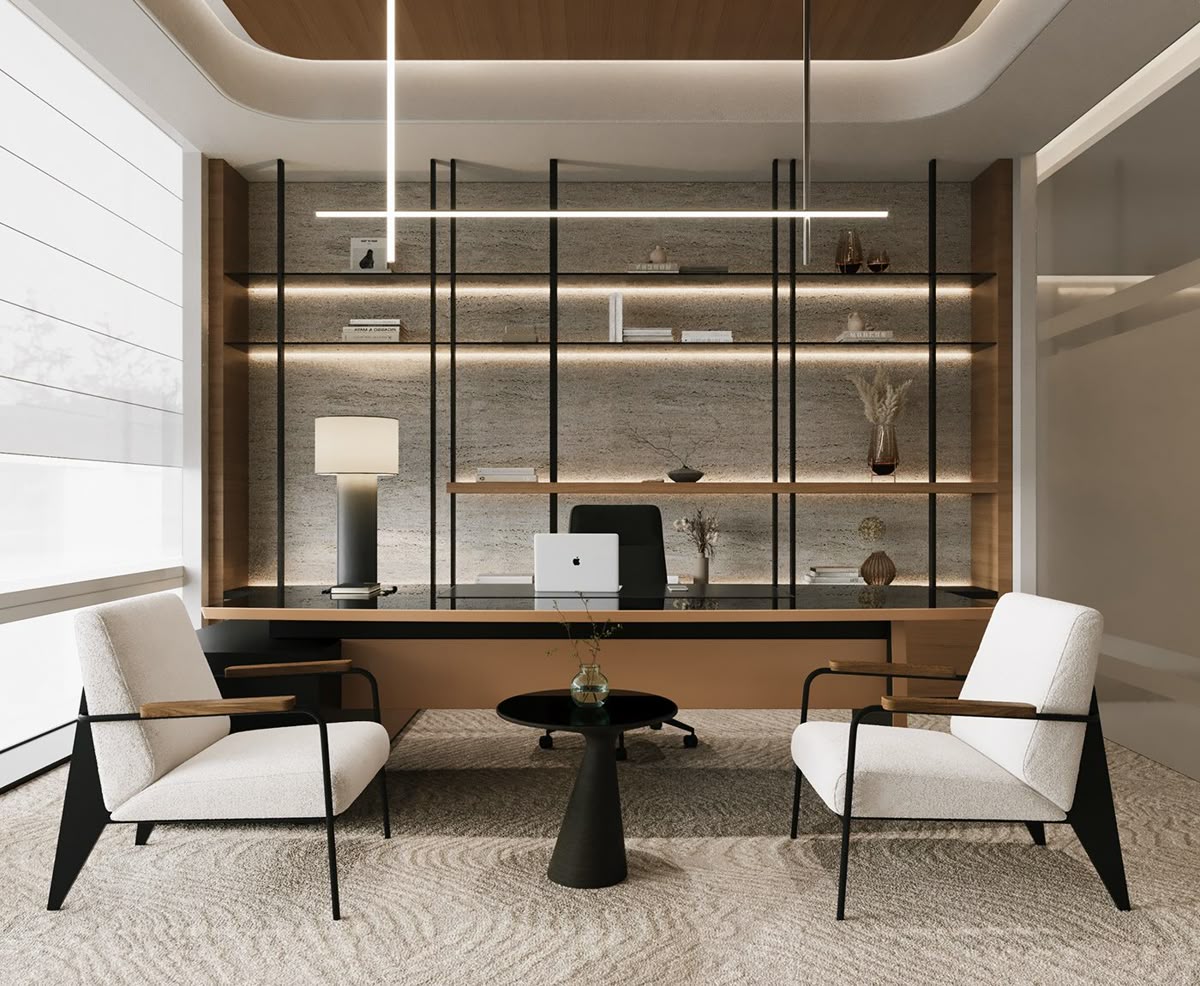
Contrast in leadership space design is an art of controlling emotions, not a display of materials or a pursuit of immediate visual effects. Hot – cold, soft – hard, rough – refined, traditional – modern… Each pair of opposites carries its own language of power. When placed together correctly, they don’t cancel each other out but support each other, creating a space that is both powerful and deeply meaningful.
A common mistake in creating leadership spaces is mixing contrasting elements to showcase the expensiveness of materials. Or, copying trends while neglecting the personality, style, and values of the leader occupying that space. More dangerously, overusing contrasting details can fragment the space, disrupting its coherence and making those entering feel stressed and confused instead of being guided.
The golden rule in a chairman’s office is to always identify a dominant element – representing authority, order, and direction – and a dialogical element, acting as a softening agent, balancing, and creating emotional depth. When power doesn’t need to be strained to assert itself, when strength listens to subtle nuances, the space will naturally become persuasive, sustainable, and have a lasting impact.
>> See more: Schedule a consultation with Proce, an expert in executive office interior design.
2. The art of mixing classic contrasting materials in the chairman office
Natural wood & metal – Where warmth meets precision in the chairman office
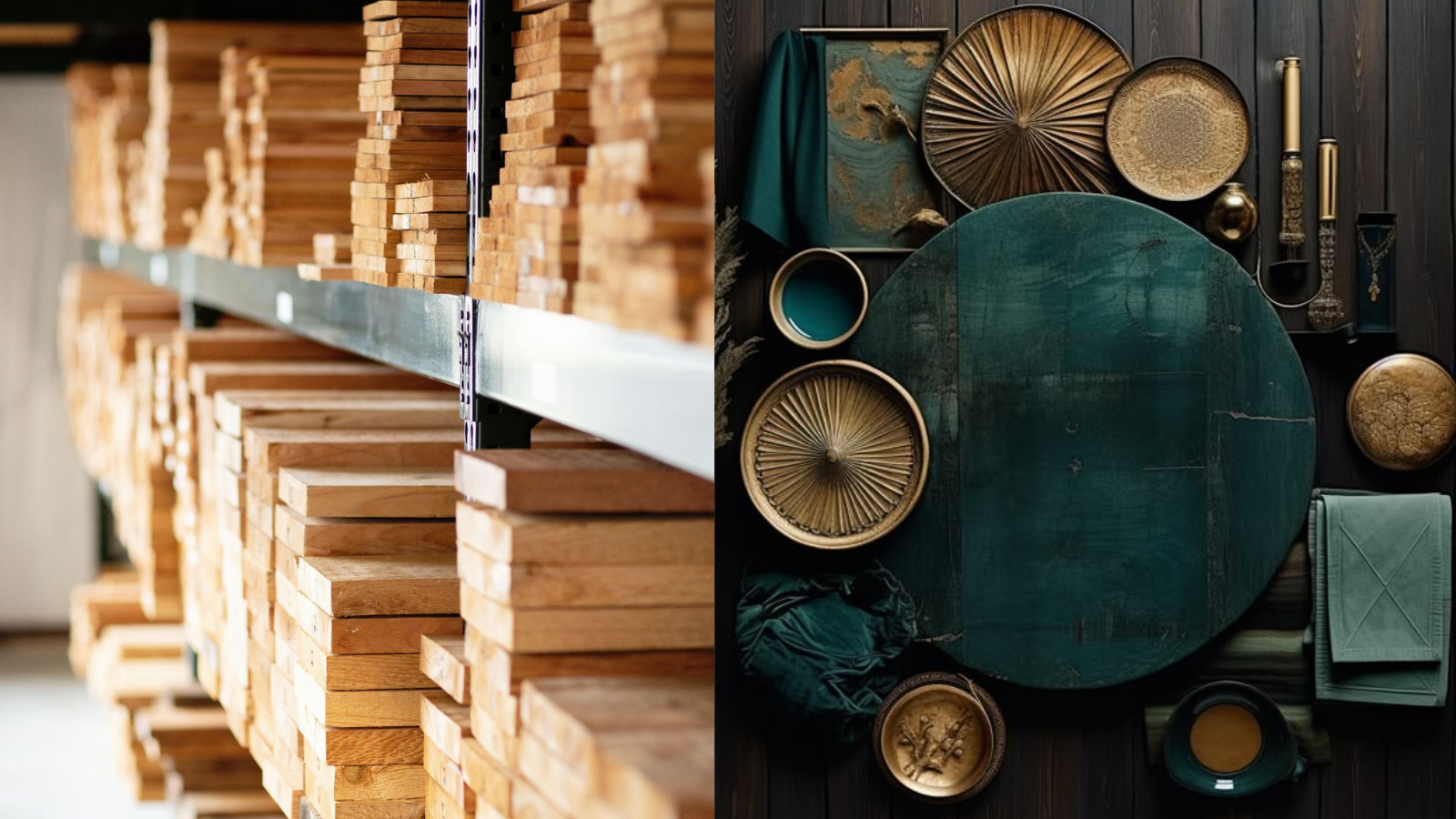
Among the classic contrasting pairings in leadership spaces, natural wood and metal are the most meaningful combination. Wood represents depth of experience, a foundation built over time, and a sense of unpretentious durability. It carries the warmth of humanity, of decisions forged through practical experience. Meanwhile, metal speaks the language of logic, control, and precision. It is the material of technology, data, and decisive choices not dictated by emotion.
When entering the chairman’s office, wood should play a dominant role in the space. It should be present on the desk, large wall panels, or cabinetry, creating a sense of solidity and reliability from the first glance. Metal doesn’t need to be excessive, but it must be strategically placed. Finely crafted details on the edges of the desk, chair legs, handles, or lighting fixtures create a subtle dialogue between the two materials. This allows the space to convey a clear message: the leader is experienced but not outdated, warm but not weak. And all decisions are made based on data, systems, and sound judgment, not on fleeting emotions.
Natural Stone & Leather – The coolness of reason and the privacy of power

In the realm of leadership, natural stone and leather are a contrasting pair that reaches the deepest levels of power, where cold rationality meets the need to protect private space. Stones, from marble and granite to sintered stone, all carry a sense of immutability, solidity, and almost uncompromising nature. They are the materials of decisions made long enough to be unwavering, of steadfastness that makes others understand there are boundaries not easily crossed. Stone appears on public surfaces such as reception desks, floors, and main walls, silently conveying a message of discipline, order, and the legitimacy of power. In contrast to this coldness, leather is the material of the personal space, of the feeling of being enveloped and controlling that space at close range.
When placed in the chairman’s chair or as a wall panel behind the leader, leather creates a “soft belt”—a place where the leader can sit, think, and make decisions in absolute security. The principle of mixing lies in the clear boundaries: stone is for areas where the gaze of others reaches, while leather is for areas asserting authority. This contrast allows the space to maintain the coolness of rationality while exuding a sense of discreet privacy, true to the profound nature of power: not ostentatious, but always with clear boundaries.
Concrete, rough stone & wood in the chairman office – Practical leadership and inner strength
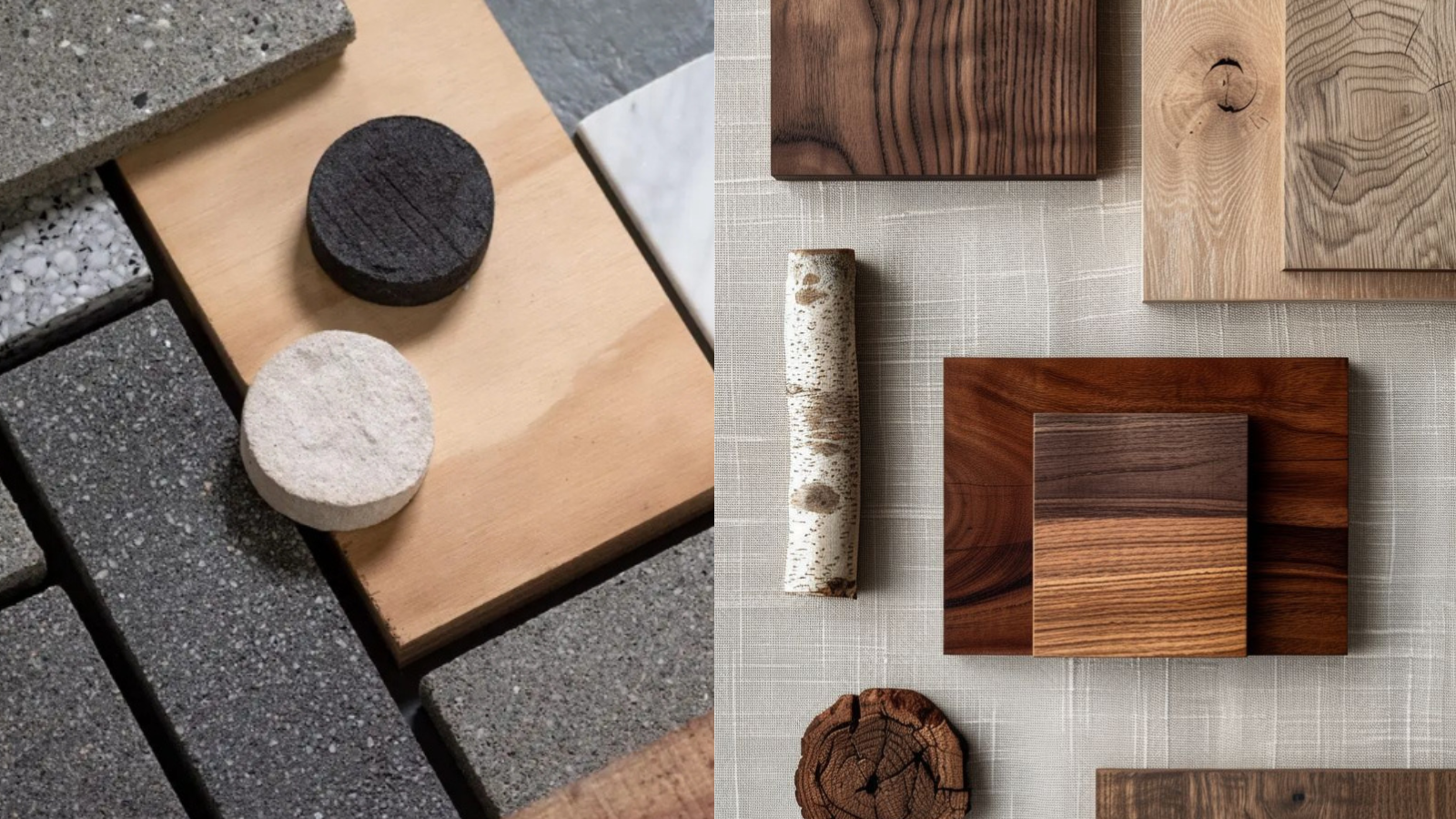
Concrete or rough stone combined with wood is a combination for leaders who have risen through the ranks from the real world. Experience and challenges forge character more than any title. This is a suitable choice for presidents with backgrounds in engineering, startups, construction, or industry—those familiar with construction sites, assembly lines, numbers, and deadlines—who always prioritize results over flashy appearances.
Concrete and raw stone possess a raw, unmasked beauty. They evoke a sense of discipline, straightforwardness, and decisiveness. They suggest that power here doesn’t come from decorative facades, but from the ability to do things genuinely and take responsibility for them. However, if not properly balanced, this combination can easily become cold and distant. Therefore, wood acts as an inner depth, softening the space with understated warmth, while subtly anchoring the inner strength.
The wood must be thick enough, with sufficient grain and quality to avoid being overshadowed by the roughness of the concrete. It appears on the desk, cabinets, or large wall sections to create an emotional anchor. The warm yellow light then becomes a crucial “mediating” element, penetrating each surface, softening the rigidity, and connecting seemingly opposing materials. The result is a leadership space that is both assertive and not dry, with inner strength felt through its stillness, stability, and authenticity.
Glass & Fabric – Transparency does not mean ostentation
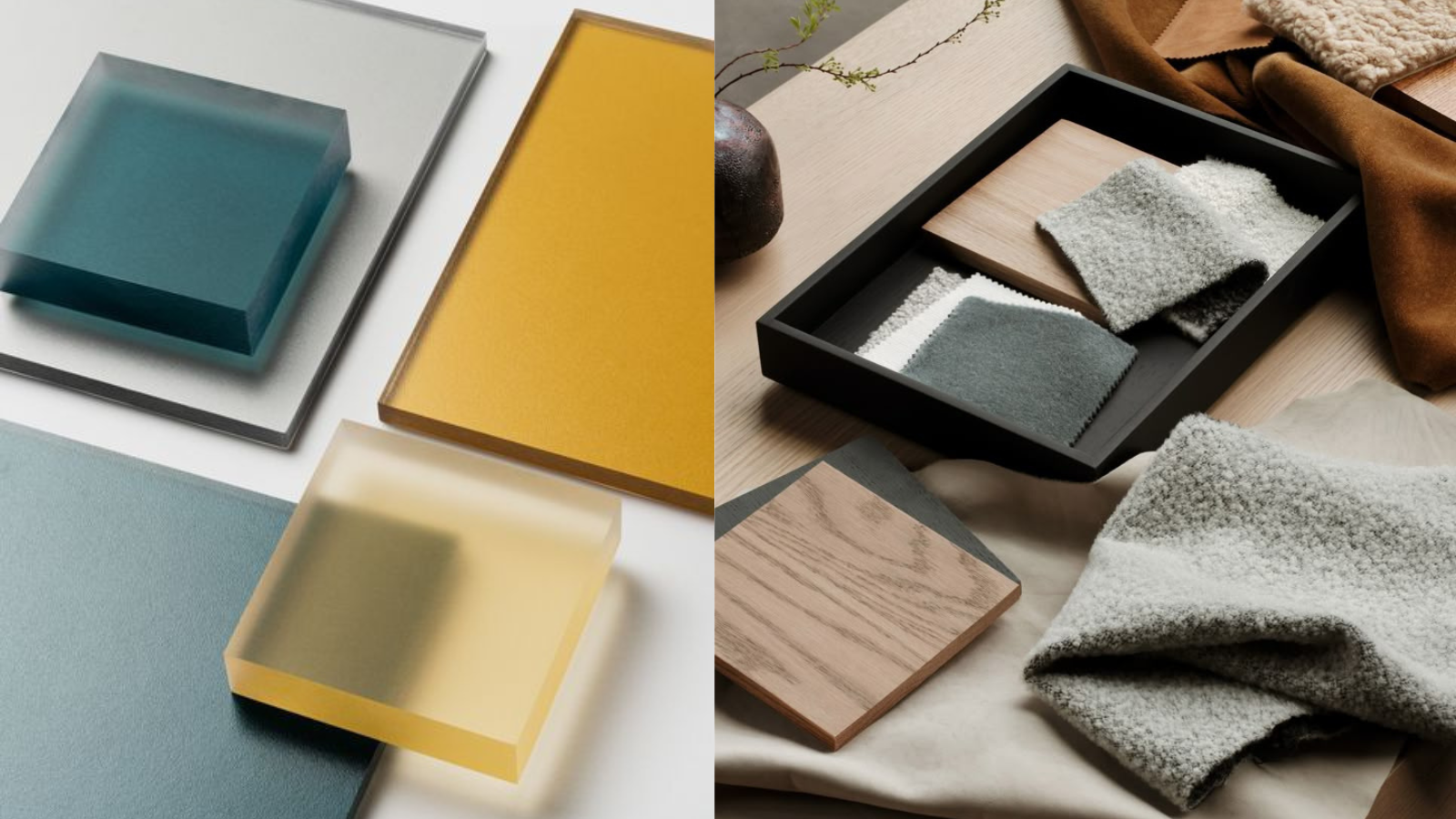
Glass and fabric are a pair of contrasting materials that represent a very modern form of power. Transparent yet controlled, open yet not easily accessible. Glass represents a global spirit, open thinking, and a willingness to dialogue. It allows light to spread, expanding the view. It creates a sense of connection with the outside world and the rhythm of the times.
In the chairman’s office, glass often appears on large facades, windows, or partitions, as a statement that this leader does not work in the shadows. However, power doesn’t lie in allowing every gaze to penetrate completely. Thick fabrics or curtains enter the space to provide control, creating soft boundaries and protecting necessary privacy. They allow the leader to proactively decide when to open and when to close, when to detach themselves from external distractions to focus their thoughts.
The presence of fabric is not merely for aesthetic enhancement. It also helps to soften emotions, mitigating the coldness of the glass and the harsh light in the space. This combination creates a subtle message: the chairman’s office is not a place to display everything, but a place where the leader has the power to choose the level of transparency. And sometimes, the ability to maintain the right distance at the right time is the highest expression of leadership.
>> See more: Differences between the interior design of a male and female executive office.
3. The Art of Proportioning – The Soul of the Chairman Office Space
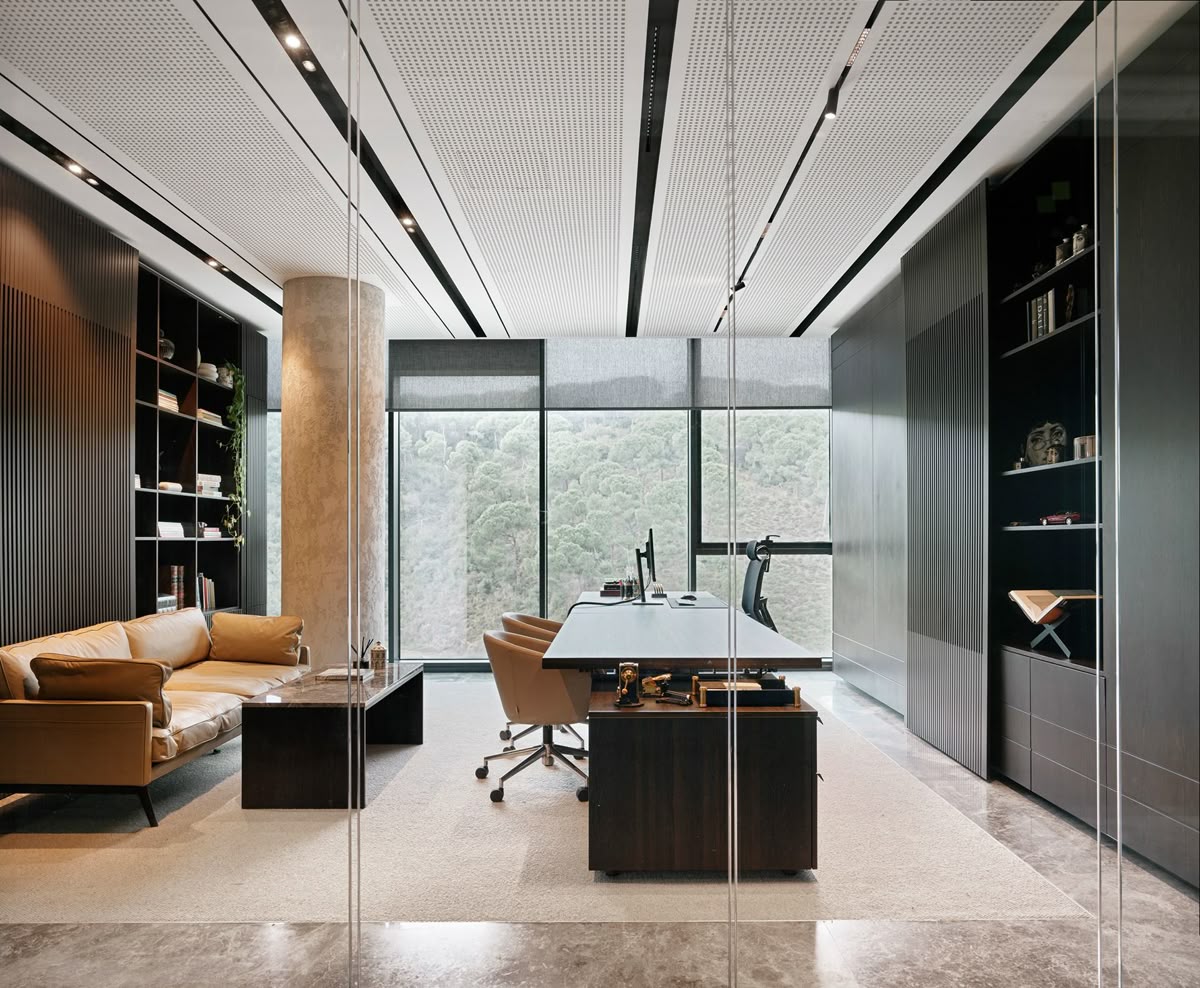
The art of proportion is the silent soul that determines whether a space of power will stand firm. It’s not expensive materials or bold ideas. Rather, it is the arrangement of proportions that creates a sense of order, control, and reassurance for those who enter.
The 70-20-10 rule thus becomes the golden standard in executive office design. Seventy percent is dedicated to the main material. It acts as the primary voice of the space, guiding emotions and asserting a consistent, effortless sense of power. The next twenty percent consists of contrasting materials, enough to create dialogue, depth, and subtle movement, but never to overwhelm the established order. The final ten percent is accent material – where the personality, personal touch, and unique spirit of the leader are revealed in a measured way.
Equally important is the existence of a clear “visual anchor point”: it could be a wall, a desk, or a strategically placed ceiling and lighting. This anchor point prevents the gaze from being distracted, creating a seamless space and a sense of focused power. When proportions are well controlled, the space becomes still, deep, and persuasive, much like a leader who knows exactly what to say and what to keep to themselves.
4. Things to avoid when mixing contrasting materials for the chairman office
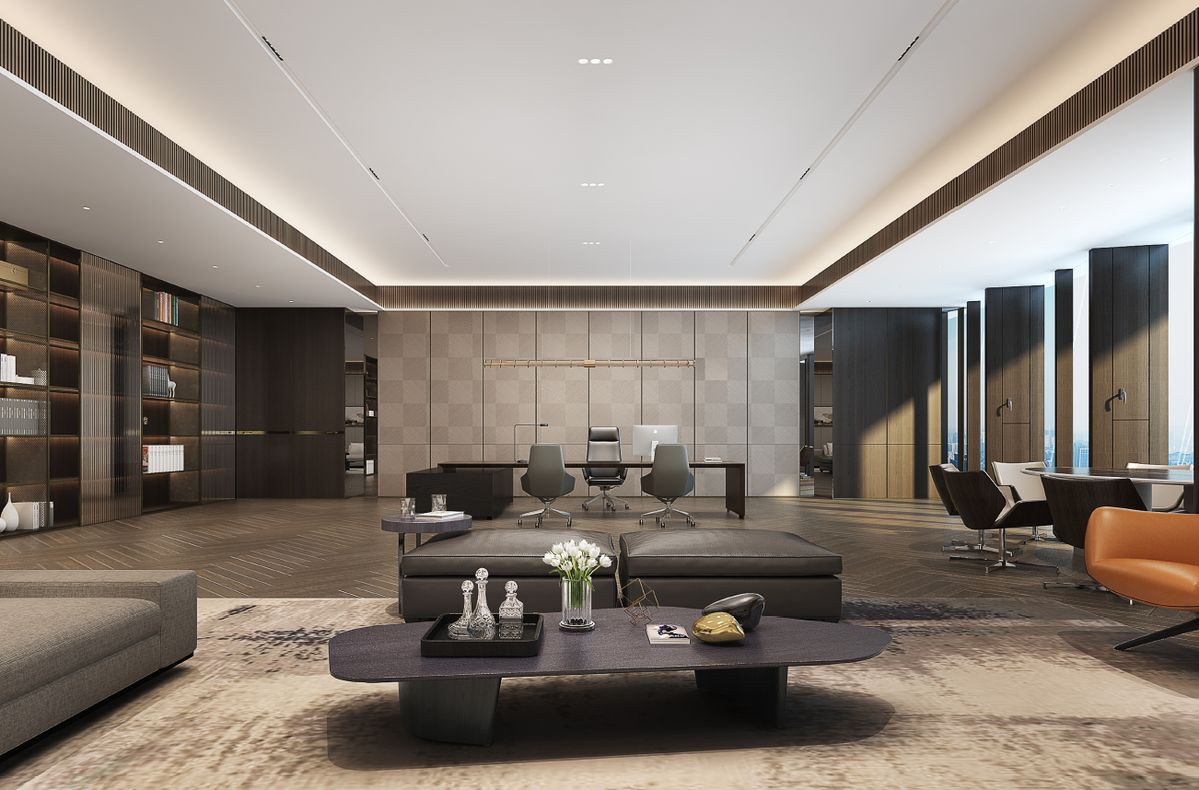
When mixing contrasting materials in a power space, there are absolute boundaries that should never be crossed. Just one wrong choice can ruin the entire design. The most common mistake is using too many materials that are “showy and ostentatious.” This makes the space feel heavy, ostentatious, and inadvertently misinterprets power as ostentation.
Excessive use of polished metal is a prime example. Instead of creating a sense of luxury, it reflects insecurity, making the space feel cold, glaring, and lacking depth. Even more dangerous is combining substandard wood with other high-end materials. The disparity in quality is not only visually apparent but also disrupts the emotional connection, rendering the entire space unconvincing.
Power doesn’t tolerate pretense, and neither do materials. However, the biggest mistake isn’t in the individual materials themselves, but in contrast without a guiding narrative. When materials are placed side-by-side merely to create an effect, the space becomes disjointed, soulless, and fails to reflect the leader behind it. A successful executive office doesn’t need many things to impress; it needs quiet consistency, where each material has a reason for existing, contributing to the story of character, experience, and the depth of power.
>> See more: President’s office – Proce understands the pressure of being in charge.
Conclude
Ultimately, the chairman office is not a place to display power. Rather, it’s a space that maintains a balance of power. When contrasting materials are intentionally placed side-by-side, the room begins to function like the leader’s own mindset: alert but not cold, decisive yet calm. Wood softens the sharpness of metal, light softens the seemingly immutable stone. And every small detail contributes to the overall rhythm of the space. A successful chairman’s office doesn’t overwhelm others, but naturally commands respect. Because the most enduring power doesn’t come from imposition, but from the sense of security that the space creates.
PROCE – TOTAL LUXURY OFFICE SOLUTION
Website: https://proce.vn/
Youtube: https://www.youtube.com/@noithatvanphonghangsang
Fanpage: https://www.facebook.com/vanphongnhapkhauProce
GG Business: https://business.google.com/dashboard/l/15115233216900975876
Linkedin: https://www.linkedin.com/company/74359718/admin/
Hotline: 090.115.6767
#phong_lam_viec_chu_tich; #phong_chu_tịch; #thiet_ke_phong_lam_viec_chu_tich
#noi_that_phong_lam_viec_chu_tich; #thiet_ke_noi_that_phong_lam_viec_chu_tich
#phong_lam_viec_chu_tich_chuan_sang; #phong_lam_viec_chu_tich_dang_cap