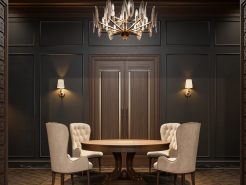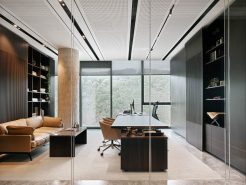

The chairman’s office has never been a matter of “beautiful or not beautiful.” For me a designer at Proce, it’s a space where power is exercised. And every detail must have a reason for existing. The chairman office interior doesn’t allow for subjective feelings, and there’s no room for compromise. Are the chairman demanding? No. They simply understand very well what they need: precision, discipline, and a space that accurately reflects the leadership vision. A misplaced desk, an off-balance lighting ratio, or a material lacking “strength”. All undermine the message of authority. Designing a chairman’s office, for me, is the ultimate test of professional competence. Either you do it right, or you shouldn’t.
1. Decoding the Leader – When Proce Designs with Understanding, Not Emotion
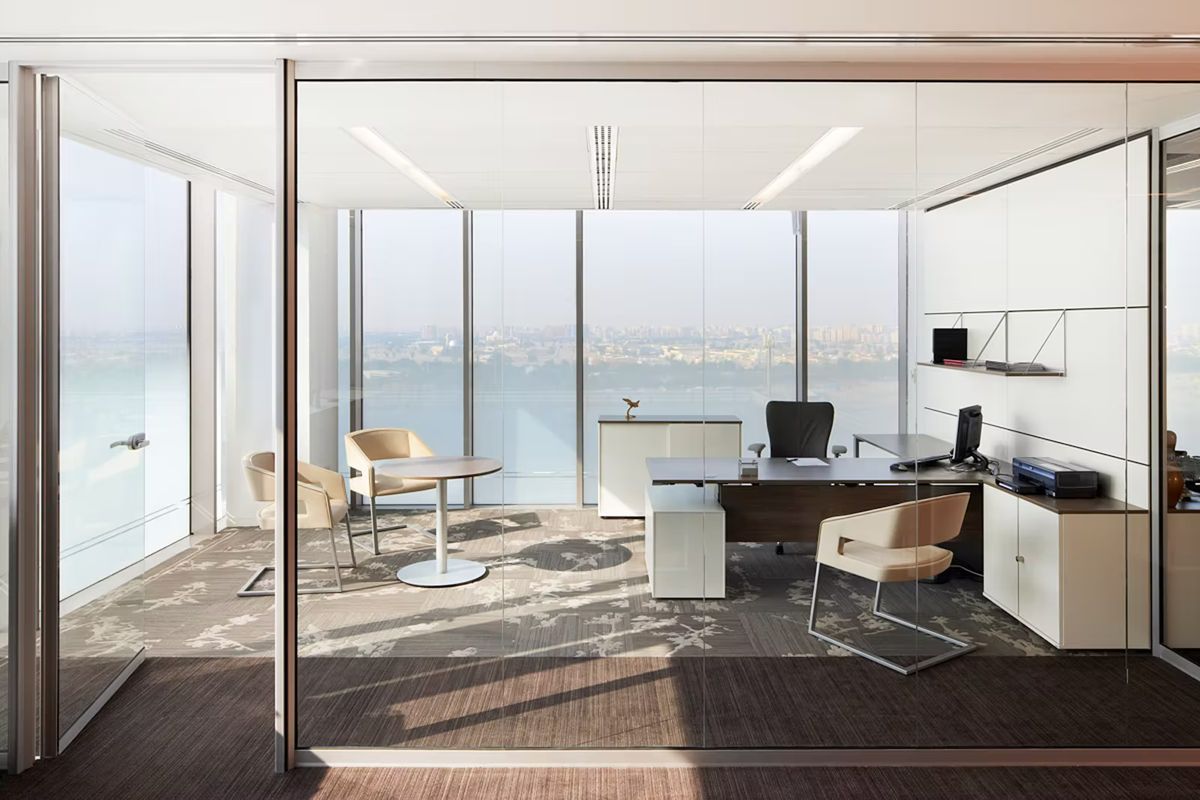
For Proce, the “difficult chairman” wasn’t a source of pressure, but rather valuable data. They didn’t usually say much, but each word carried the weight of a carefully considered decision. They rarely offered praise, and it was their silence that was the clearest signal that the space hadn’t yet reached its full potential.
The most challenging aspect isn’t the small number of changes. Rather, it’s the fact that even small adjustments can completely skew the entire concept if the designer doesn’t understand the root of the leadership mindset. Therefore, at Proce, we don’t rush into drawing. We choose to begin by understanding the person behind the chairman’s chair.
We observe their demeanor to discern whether they are a controlling or inspirational leader. We study their work habits to understand their need for absolute focus, speed of decision-making, or depth of analysis. And above all, we observe their nonverbal language: where does the chairman’s gaze linger longer? How do their body language change when faced with different spatial options? Because for us, without understanding the chairman, any design, no matter how beautiful, is merely superficial.
>> See more: 13 ideas for designing a luxurious and modern executive office.
2. Chairman Office Interior Design – Proce takes control of the game with the demanding chairman
Proce didn’t ask what the leaders wanted, but rather defined who they were
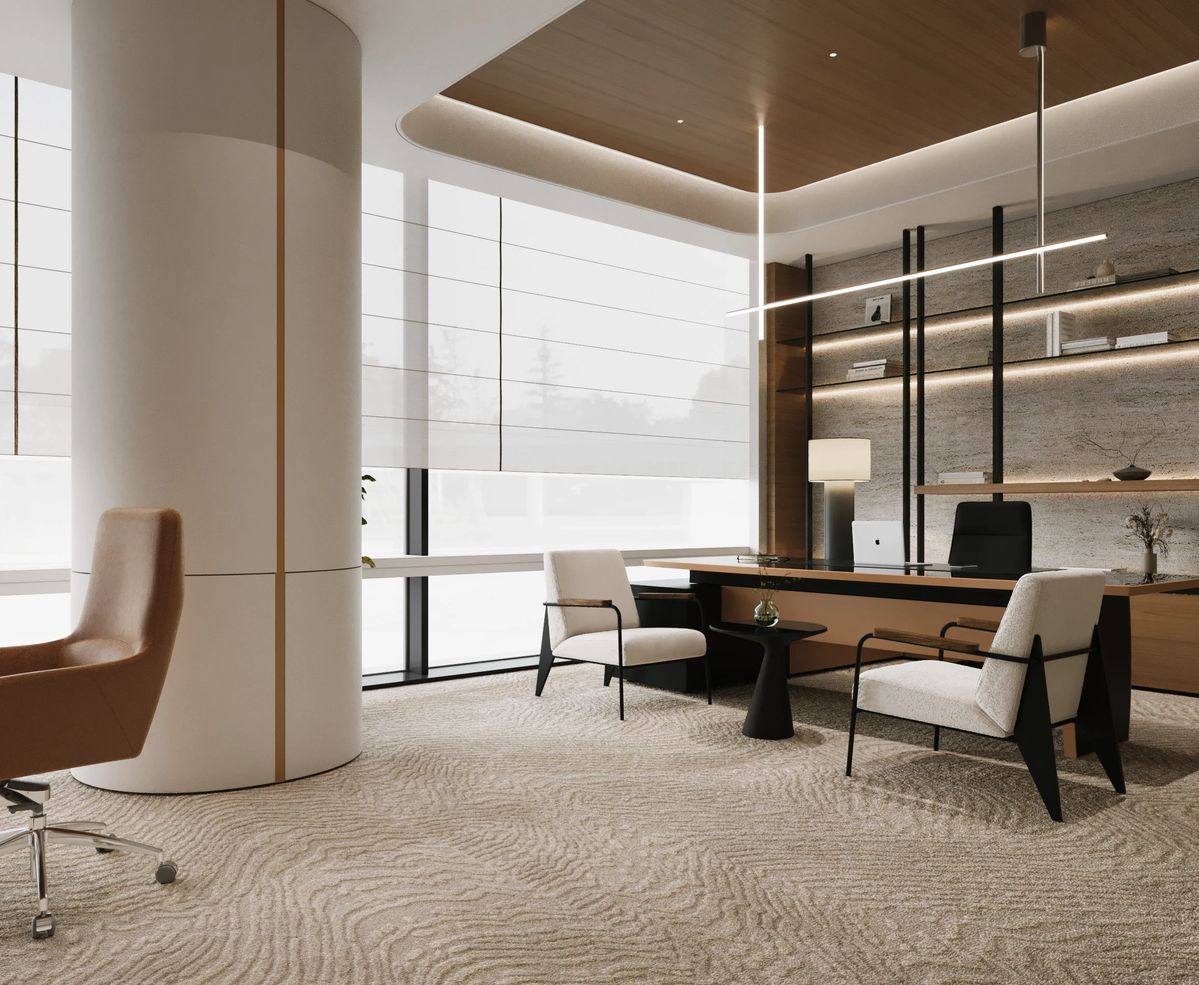
With Proce, the question “What do you want?” always comes later. Because needs may change, but leadership identity doesn’t. When working with a demanding chairman, the first thing we look for isn’t their favorite color scheme or familiar style. It’s the true role of this space within their power ecosystem. Is it a place for strategic decision-making or a place to convey messages of control? Is it a space for absolute focus or for symbolic meetings?
These questions forced the chairman to reflect on himself in his role as leader. They also compelled the designer to move beyond formalistic thinking. From the leader’s identity, Proce established the “backbone” for the entire design. From spatial proportions, power axes, lighting rhythms to the main materials. Once the identity is clear, all subsequent details are simply a matter of consistency. Proce doesn’t chase trends, because trends don’t represent personal power. We design from the roots of humanity, so that space becomes a natural extension of the leader’s mindset.
Proce manages expectations in the chairman office interior
Demanding chairpersons rarely state their expectations explicitly, but they recognize immediately when things aren’t meeting those expectations. This is where many projects fail from the outset. Proce understands that without managing expectations, every blueprint risks becoming a mere experiment. Therefore, we invest seriously in standardizing expectations from the very beginning.
At Proce, moodboards aren’t just for aesthetics; they’re strategic tools. They establish the dominant emotional rhythm, the necessary restraint, and the acceptable boundaries. Alongside this is the overarching narrative of the space, where each area and each material is present for a clear, purposeful reason. More importantly, Proce always clarifies from the outset what is unacceptable and the non-negotiable principles. Once boundaries are established, meticulousness is no longer an ambiguous pressure but a concrete measure of quality. At this point, the chairman and the design team stand on the same side: jointly protecting the ultimate value of the space.
Proce’s design was purposeful – the chairman office interior is designed to serve only one person
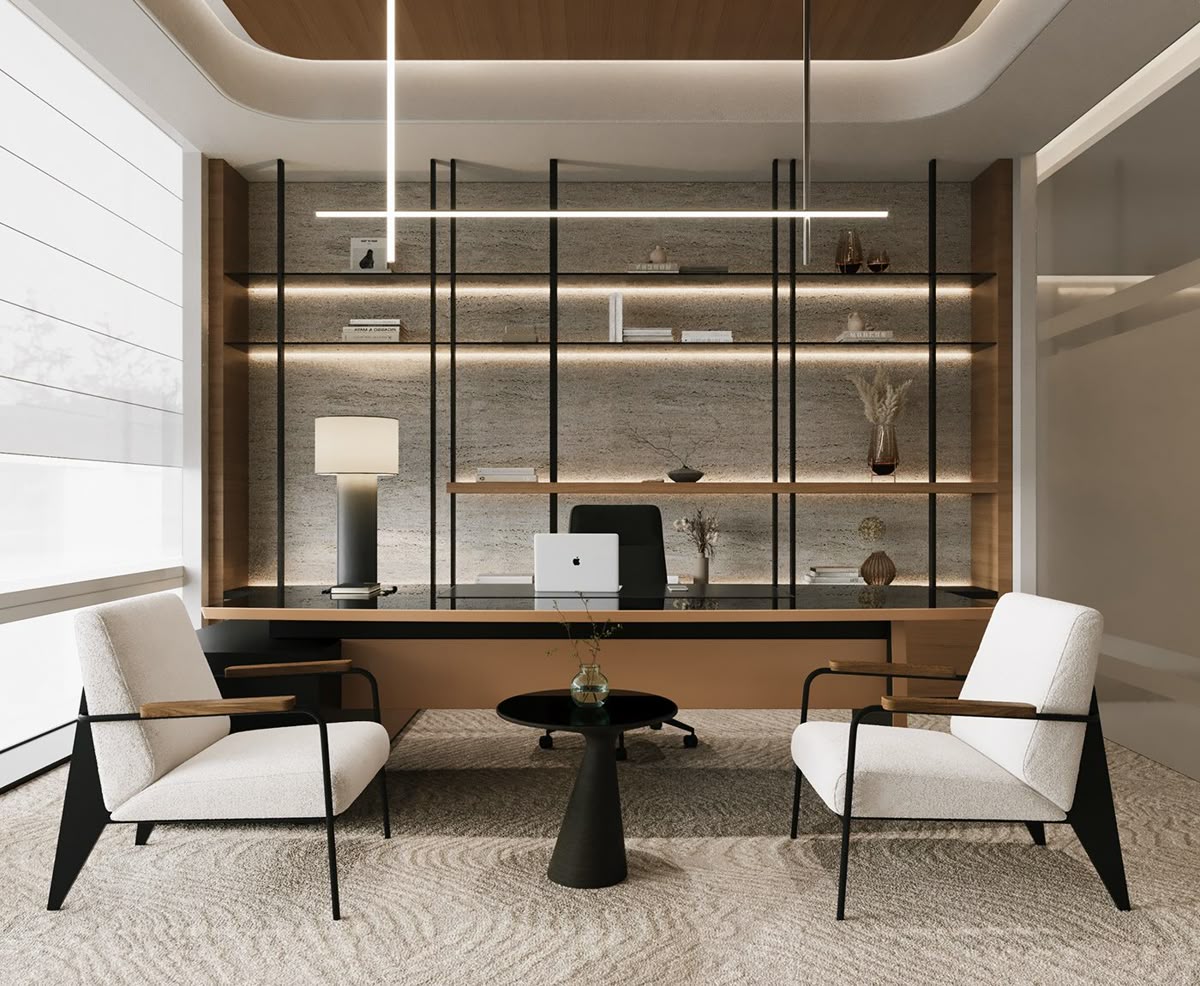
The chairman’s office is not a space for pleasing the masses, much less a stage for showcasing collective taste. Proce approached this design with a “deliberate selfishness.” Every decision revolves around a single person: the chairman.
If they prioritize focus, Proce is willing to cut out unnecessary decorations. If they value efficiency and speed, materials are minimized to serve functionality and the work environment. Every detail, from the placement of desks and ceiling height to how light falls into the space, must answer one crucial question: does this help leaders make better decisions?
For Proce, the interior design of a chairman’s office isn’t about making an immediate impression, but about creating the optimal psychological state for the leader. A successful chairman’s office is one where the space doesn’t “speak,” but power is clearly present in every moment of work.
>> See more: President’s office – Proce understands the pressure of being in charge.
Proce manages risk because the chairman does not accept error
The demanding chairman doesn’t tolerate mistakes. And Proce doesn’t compromise on that either. We don’t put our faith in luck or subjective feelings of right and wrong. Every project is built on a rigorous risk management mindset.
Proce always prepares multiple scenarios: the most accurate plan, a backup plan, and a quick-change plan when conditions change. In particular, we strictly control areas prone to “disillusionment,” such as whether the actual materials accurately reflect the image, whether the lighting in real life retains the same quality as in the render, and whether the details most likely to be scrutinized are tested beforehand.
For Proce, even a small mistake in construction can undermine the entire message of power. Therefore, we choose to verify through data, real-world experience, and processes, rather than relying on trust. That’s the only way to stand firm against the silent nods of the chairman.
Proce communicates like a consultant – concise, precise, and impactful
A demanding chairman doesn’t need lengthy presentations or rambling explanations. Proce understands that communication is also part of the design. We say less, but we say exactly what the chairman cares about. Every proposal is presented with clear logic. Specific data and rigorous arguments, rather than emotion or flowery language.
At Proce, there’s an unwavering principle: we don’t present a proposal until we’re absolutely certain. This selective communication fosters quiet trust. The chairman doesn’t need to listen extensively to know who understands the situation. When words carry the weight of commitment, the space is treated with due respect. The working relationship naturally shifts from “client-designer” to “leader-strategic partner.” And that’s the highest standard Proce consistently pursues.
3. When the demanding chairman changed his mind about the chairman office interior, how did Proce handle it?
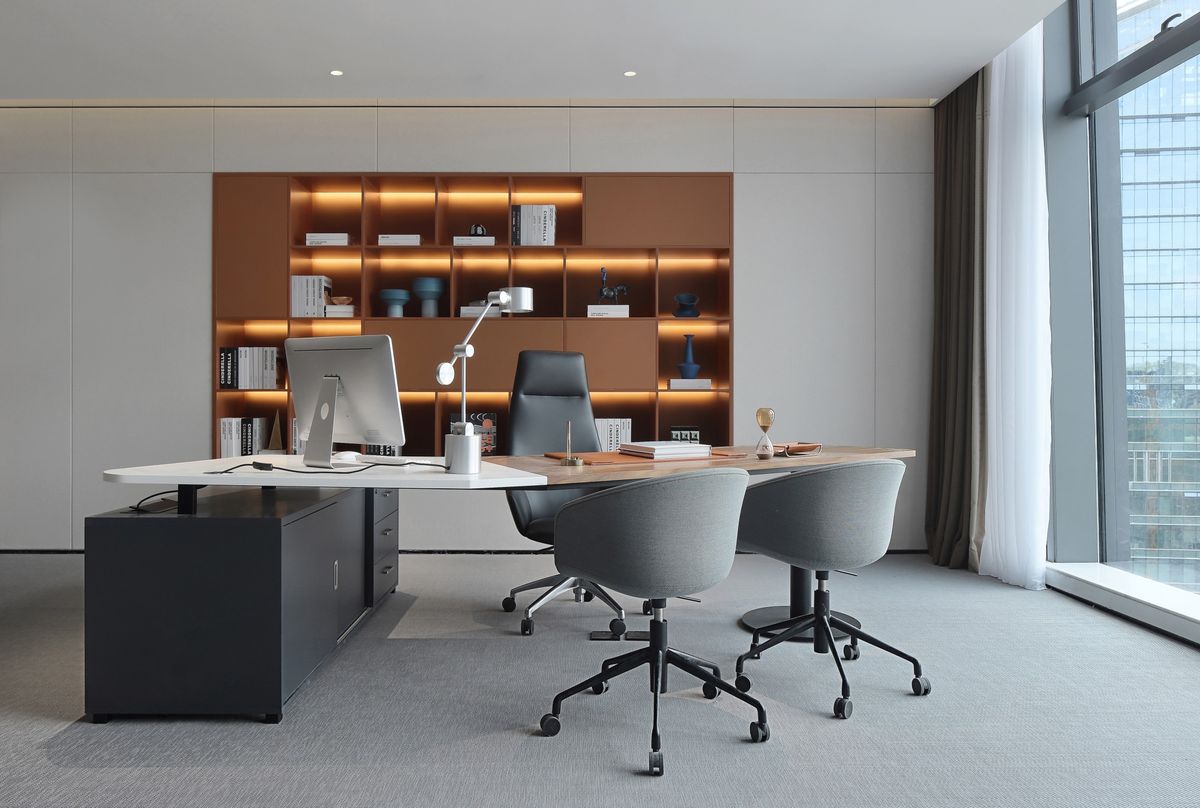
When leaders change their minds, the most important thing isn’t reacting quickly, but reacting correctly. We understand that every change carries a signal. It could be an immediate emotion, or it could be a sign of a deeper strategic shift. Therefore, instead of rushing to adjust, we take the time to analyze the nature of that change.
If the adjustments are reasonable, they help the space better reflect the leadership’s mindset in the new phase. The refinements are made quickly, accurately, and without disrupting the core structure. Conversely, when a proposal risks breaking the concept established from the initial leadership identity, silence becomes the wrong choice. At that point, constructive criticism becomes a professional responsibility, not to defend the design, but to protect the power axis of the space. Respect for the leader doesn’t lie in blindly following every opinion, but in daring to uphold the final decision’s integrity.
>> See more: Proce and the story behind every detail of the chairman’s office interior.
Conclude
For us, demanding chairmen are never a barrier, but a benchmark for elevating our skills. These stringent requirements force interior designers to abandon superficial work and the pursuit of form. They must go straight to the core of power and leadership thinking. Each chairman office interior is a puzzle without a ready-made answer. It must be both precise and profound enough to become a silent statement of the leader. We believe that when the chairman enters the room, no praise or guidance is needed; only a silent satisfaction. That is the moment the design has fulfilled its role: serving power, reflecting character, and leaving a lasting impression.
=====\
PROCE – TOTAL LUXURY OFFICE SOLUTION
Website: https://proce.vn/
Youtube: https://www.youtube.com/@noithatvanphonghangsang
Fanpage: https://www.facebook.com/vanphongnhapkhauProce
GG Business: https://business.google.com/dashboard/l/15115233216900975876
Linkedin: https://www.linkedin.com/company/74359718/admin/
Hotline: 090.115.6767
#noi_that_phong_chu_tich; #thiet_ke_noi_that_phong_chu_tich
#noi_that_phòng_chu_tich_dang_cap; #noi_that_phong_chu_tich_chuan_sang
#derco_noi_that_phong_chu_tich; #bo_tri_noi_that_phong_chu_tich