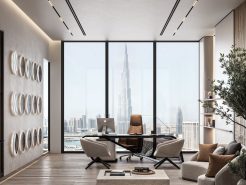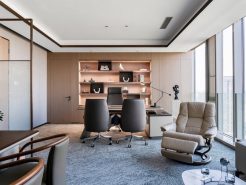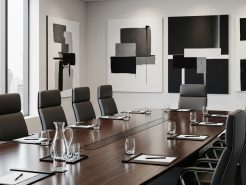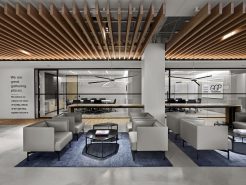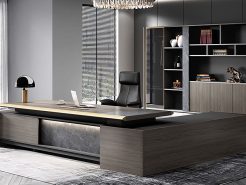
During the process of designing luxury office interior, I realized that the true value of a workspace doesn’t lie in its immediate beauty, but in how the materials “age” over time and with daily use. This is especially true for shared employee workspaces, where desks, chairs, cabinets, and partitions are constantly subjected to wear and tear. The durability of the wood becomes a silent but decisive measure of class. Walnut, oak, ebony, or engineered wood… Each type has its own “character.” Only by understanding the true nature of the material can a designer create a sustainable luxury office – not ostentatious, but profound.
1. Criteria for evaluating the durability of wood in luxury office
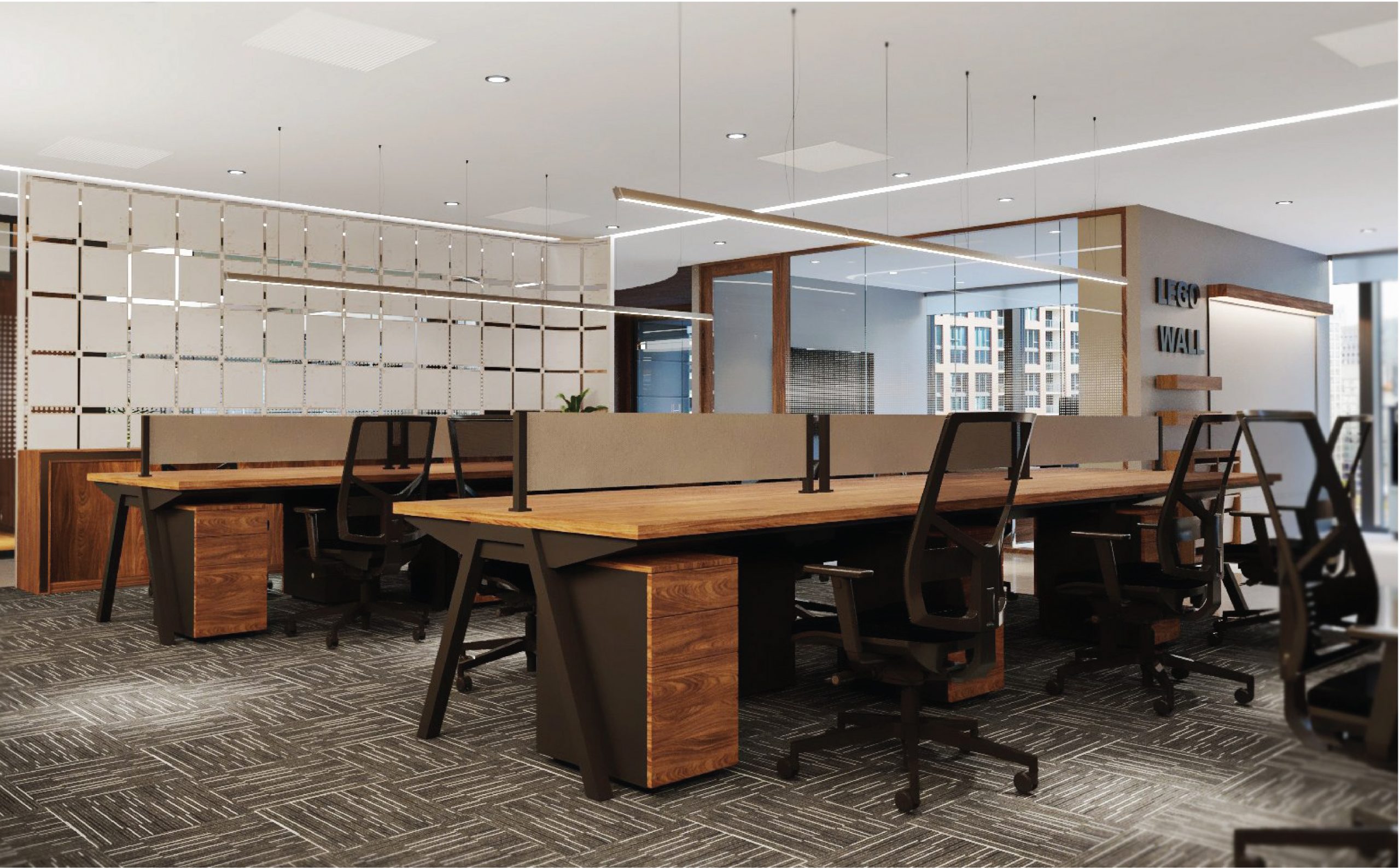
In luxury office design, when evaluating the durability of wood, I always view it as a “backbone” element that determines the quality of the space, not just a surface finishing material. First and foremost is its ability to withstand weight and resist warping. This is a core criterion for items such as shared workstations, large filing cabinets, or wooden partitions.
Good quality wood must maintain its structural stability after many years of use. It shouldn’t sag or warp, so users always feel a sense of solidity and quality from the first touch. Next is its ability to resist moisture and adapt to continuously air-conditioned environments – a challenge many modern offices face. Seasonal humidity changes can cause low-quality wood to crack, blister, or delaminate, severely reducing the aesthetic value and lifespan of the structure.
Another crucial factor is resistance to termites and aging, especially for offices with a lifespan of 10 to 20 years and high user traffic. Finally, the wood surface must be durable enough to resist scratches, fading, and peeling, as shared office spaces experience a lot of wear and tear during operation. Truly durable wood is wood that retains its color, smoothness, and luxurious feel over time, helping the space maintain a professional and trustworthy image.
>> See more: What do businesses expect from luxury office interiors?
2. Comparing the durability of common wood types used in luxury office interior
Walnut wood – High durability coupled with long-term value
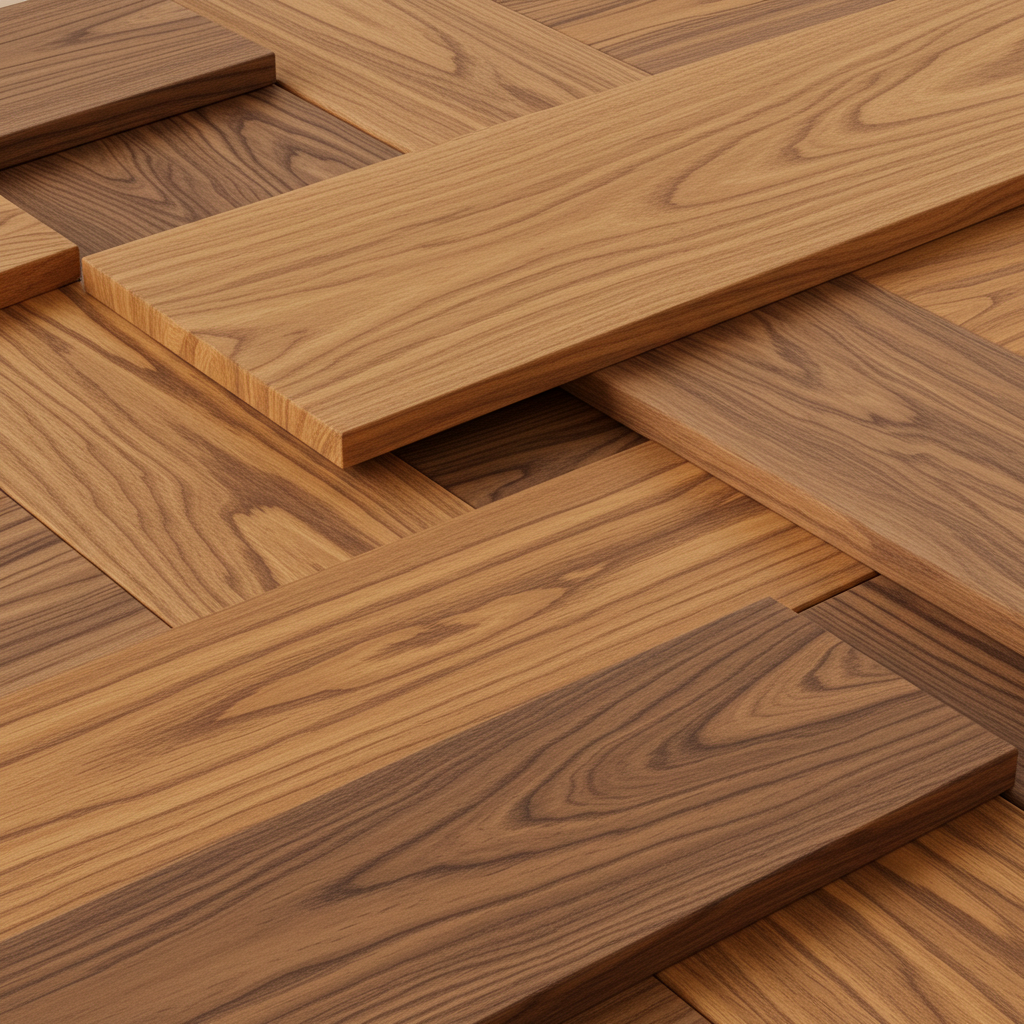
From the perspective of someone directly involved in implementing numerous luxury office projects, I’ve always considered walnut wood to be a material representing enduring “stable class.” Walnut wood has a moderately hard texture, fine grain, and tight bonding. This gives it excellent load-bearing capacity without creating a heavy feel in the space. When properly treated and dried according to technical standards, this type of wood virtually eliminates the risk of warping or cracking. This is a key factor in ensuring long-term stability for large shared workstations and storage cabinets that operate at high intensity daily.
In a shared work environment
In a constantly air-conditioned office environment, walnut wood demonstrates remarkable stability, maintaining its shape well, resisting deformation, and not deteriorating quickly. An interesting aspect of walnut wood’s durability is its “beautiful aging” characteristic. The longer it’s used, the darker the wood becomes, creating a sense of luxury and aesthetic depth that few other woods can match. This helps the office maintain a sophisticated image for many years without needing frequent replacements.
However, to maximize its inherent durability, walnut wood requires a precise construction process, from selecting the raw material and surface treatment to the installation structure. The high cost is a definite barrier, but for businesses that prioritize brand image and a long lifespan, this is a completely worthwhile investment.
>> See more: Applications of wood in luxury office interiors.
Oak wood – A durable, versatile solution for luxury office interior

Oak wood is one of the materials highly valued by office interior designers due to its good balance between durability, functionality, and cost. Structurally, oak has a strong grain, stable load-bearing capacity, and relatively good elasticity. It is very suitable for shared workspaces with high usage frequency. When properly treated and dried, oak wood can maintain its shape stability in air-conditioned environments, minimizing warping when temperature and humidity change with the seasons.
In practice, I often use oak wood for employee desks, decorative partitions, or open shelving systems… Items that require durability but still create a light, friendly feel. The natural light color of oak wood helps make the office space feel airy. It is especially suitable for open-plan work environments with plenty of natural light.
However, in terms of long-term durability, oak wood still has certain limitations. Its resistance to moisture and termites is inferior to walnut if the treatment process is not up to standard. Therefore, regular maintenance is essential. If used correctly and cared for properly, oak wood can perfectly meet the needs of high-end offices for 10-15 years, becoming a sustainable choice for businesses aiming for a balance between quality and return on investment.
Ebony wood – Almost absolute physical durability, but not for everyone
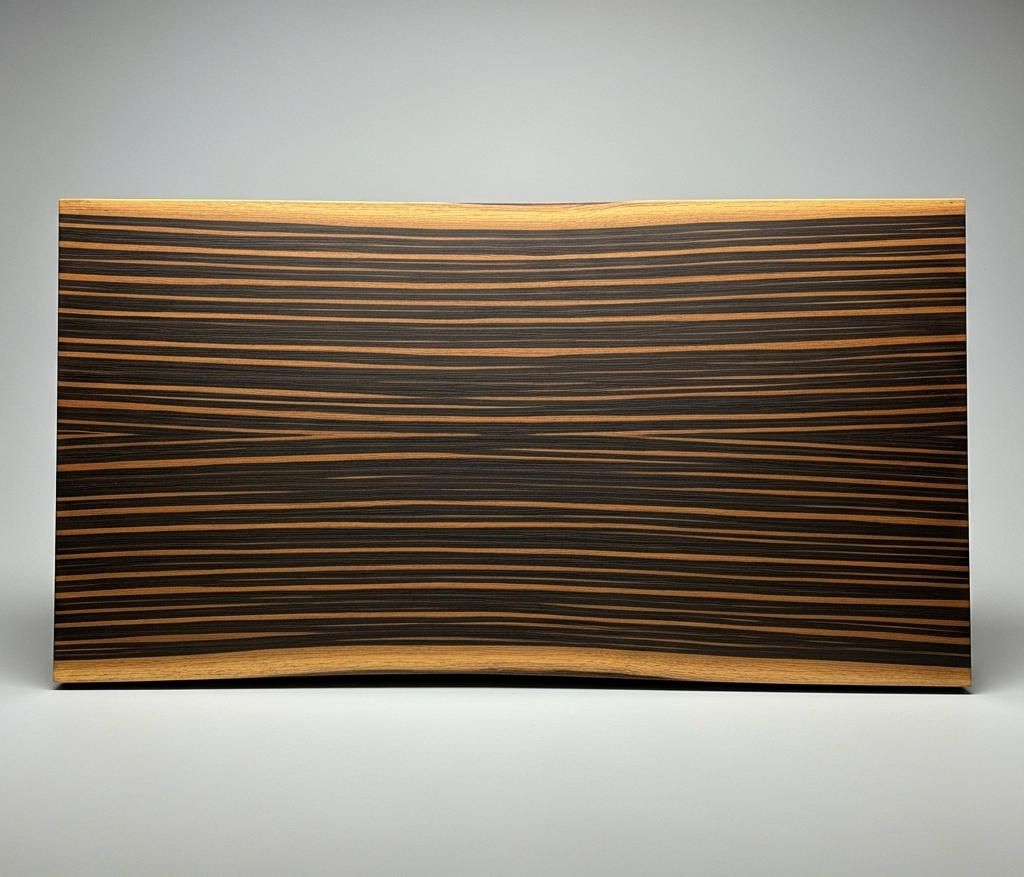
From a purely physical standpoint, ebony is one of the most durable woods I’ve ever worked with. Belonging to the group of very hard, heavy, and dense woods, ebony possesses incredibly impressive strength and abrasion resistance. Its surface is virtually scratch-resistant even after prolonged use. It also offers almost absolute resistance to termites and wood-boring insects, a quality rarely matched by other woods.
In terms of durability alone, ebony wood can be considered “everlasting” in office interiors. However, when placed in the context of shared office design, its exceptional durability becomes a double-edged sword. Its heavy weight makes constructing long desks or matching furniture sets difficult, leading to higher costs and technical risks. The dark color of ebony wood can easily create a heavy, oppressive feeling if used extensively in shared workspaces, where a sense of spaciousness and dynamism is needed.
Furthermore, ebony wood is very expensive, making it unsuitable for large-scale production projects. Therefore, from a practical design perspective, ebony wood should only be used as an accent material, such as for reception counters, special meeting rooms, or high-end decorative details. In these locations, the superior durability of ebony wood truly shines without putting strain on the overall space.
Engineered wood in luxury office interior – Stable durability and superior control
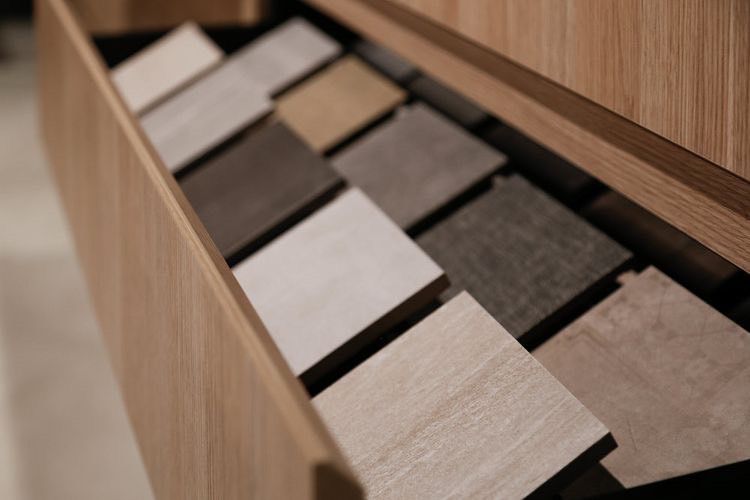
In modern, high-end office projects, engineered wood such as moisture-resistant green core MDF or veneer-covered plywood is increasingly used. This isn’t just because of its low cost, but also because of its excellent durability control. From practical experience, I highly appreciate the stability of these types of wood in continuously air-conditioned environments, where natural wood sometimes risks warping if not processed evenly.
Green core MDF and plywood have a uniform structure and minimal deformation. They are particularly suitable for the mass production of shared office desks, storage cabinets, and partitions. Under normal use conditions in a shared office, the durability of engineered wood can reach 10-15 years, meeting the needs of long-term operation. Another important advantage is the ease of maintenance and replacement in case of localized damage. Businesses do not need to replace the entire furniture system.
However, compared to natural wood, engineered wood still has limitations in terms of water resistance and impact resistance, especially at edges and frequently contacted points. Its long-term lifespan is also shorter if used beyond the original design cycle. Therefore, engineered wood is a smart choice for high-end offices that need to control costs, ensure consistency, and maintain stable durability throughout its lifespan.
>> See more: Design and construction of luxury offices using ceramics.
Conclude
From the perspective of a seasoned professional, luxury office interiors are not judged by the initial overwhelming impression, but by their stability after many years of operation. The success of a design lies in ensuring the shared workspace remains sturdy, the wood surfaces don’t deteriorate, and the user experience doesn’t become “tired.” Each type of wood has its own limitations and strengths. The role of the expert isn’t to choose the most expensive material, but to select the best one for the intensity of use, budget, and long-term strategy. A truly luxurious office is where materials serve people, not the other way around.
=====\
PROCE – TOTAL LUXURY OFFICE SOLUTION
Website: https://proce.vn/
Youtube: https://www.youtube.com/@noithatvanphonghangsang
Fanpage: https://www.facebook.com/vanphongnhapkhauProce
GG Business: https://business.google.com/dashboard/l/15115233216900975876
Linkedin: https://www.linkedin.com/company/74359718/admin/
Hotline: 090.115.6767
#van_phong_hang_sang; #noi_that_van_phong_hang_sang
#thiet_ke_thi_cong_van_phong_hang_sang
#thiet_ke_noi_that_van_phong_hang_sang