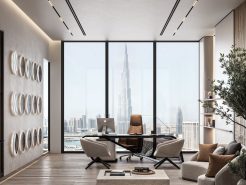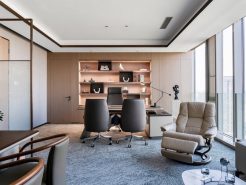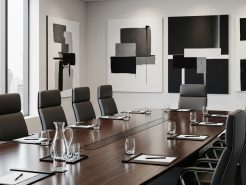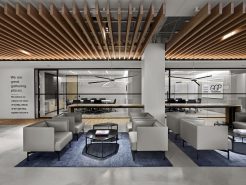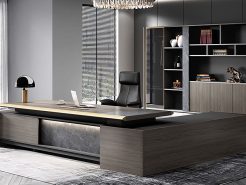

Designing the chairman office isn’t simply a matter of size or investment. It’s an art of creating power through space. Some rooms, hundreds of square meters in size, lack emotional depth and aesthetic appeal, diluting the leader’s status from the very first glance. Conversely, a meticulously designed chairman’s office, with attention to detail in every aspect—from materials and lighting to furniture arrangement—can create a sense of power, class, and absolute distinction. It’s a place where power doesn’t need to be ostentatious, yet it still commands respect and admiration from anyone who enters for the first time.
1. Large territory does not equate to power
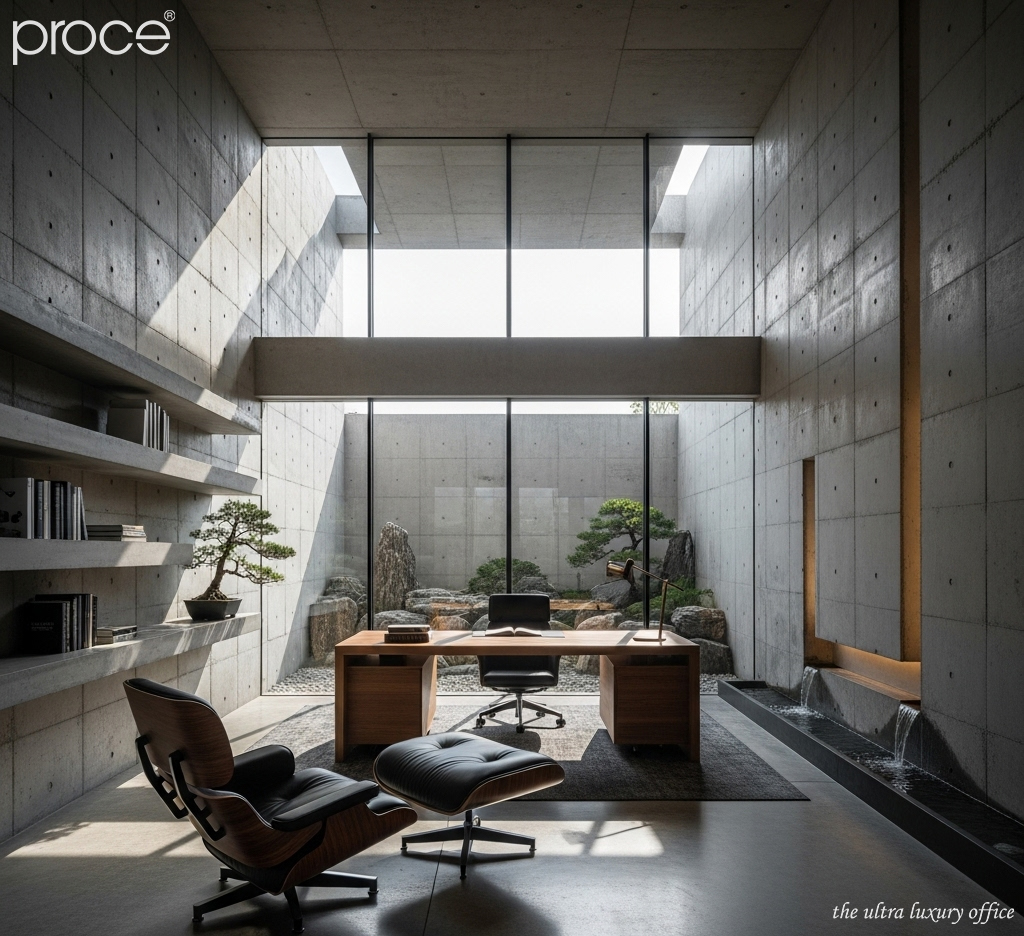
In interior design, I always tell my clients something that seems paradoxical: large space doesn’t automatically create power. Many spaces spanning hundreds of square meters still fail to convey the owner’s status. Because power doesn’t come from physical size, but from how the space is controlled and organized.
When a large room is poorly designed, its sense of power is immediately diluted. Furniture is placed merely to fill space. The interior is disjointed, lacking focal points, and the visual axis is not carefully considered… All of this makes it difficult for the visitor to identify the center or the dominant element. The space then becomes empty, cold, and lifeless. The owner, though present, does not truly “dominate” their own room.
Power needs to be controlled, not flaunted
Power in a space isn’t about ostentatious size, but about the ability to influence the emotions and behavior of those who enter. A space that’s too large but lacks visual order and clear stratification of functional areas will create a sense of underlying chaos, even if it appears luxurious on the surface. Those facing it won’t perceive a sense of solidity, but only excess. Meanwhile, true leaders always demonstrate power through meticulous control of details. They know how the gaze is directed, which seating positions are dominant, where the empty spaces are intentionally placed, and where the focal points are unmissable.
Good interior design reflects that very mindset. A space of power doesn’t need to be overly large, but it must have a clear structure. A tight rhythm and a strong visual focal point. When every element—from proportion, light, materials, to layout—serves a unified order, power is naturally felt without needing to “speak.” Therefore, in design, power isn’t about how many square meters you have, but about how well you control them.
>> See more: Why don’t top leaders work in makeshift chairman’s offices?
2. Why designing the chairman office reflect the power of the leader?
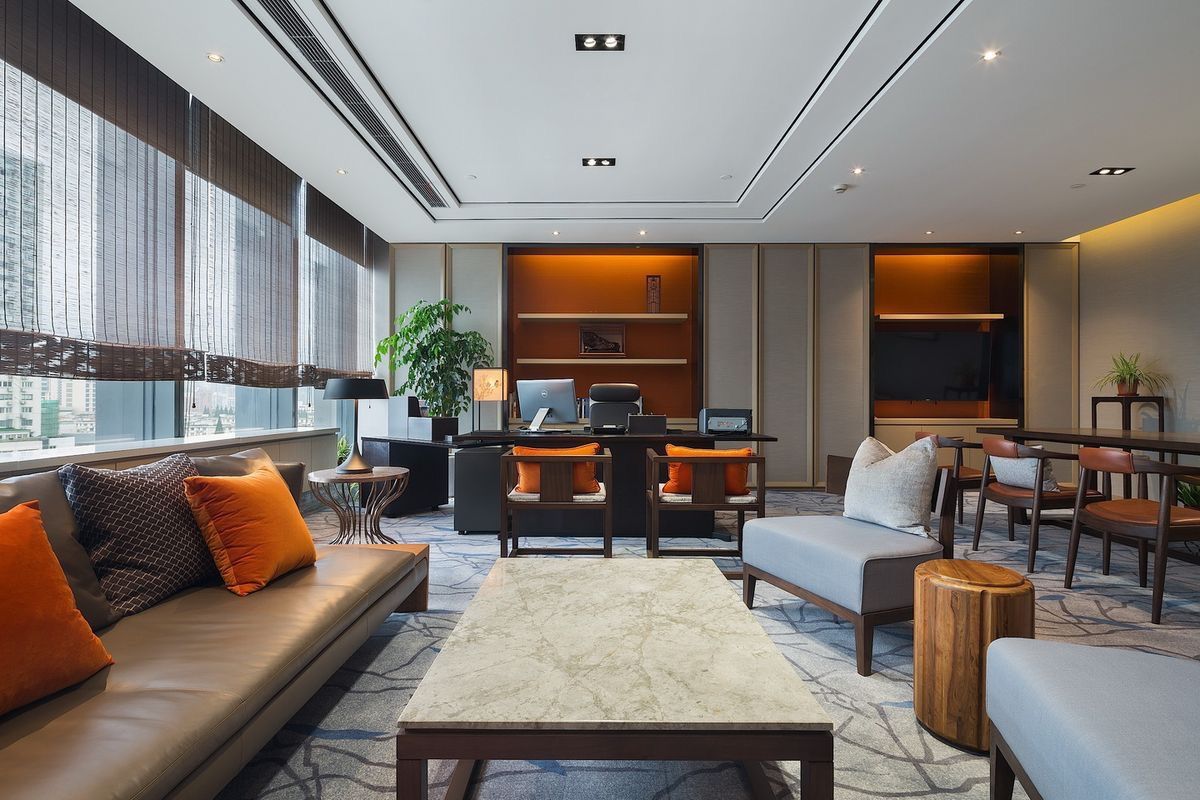
Designing a truly luxurious executive office doesn’t start with size. It starts with how the space “speaks” about the leader’s power without words. A large room with a cluttered layout, misaligned viewpoints, an off-center desk, or one lacking depth will never create a sense of dominance.
Conversely, a space that is just the right size, well-organized, and purposeful immediately conveys the owner’s status to those who enter. The spatial layout is the first language of power. Where does the gaze point? Who is at the center? Does the chairman’s desk truly control the entire space? The desk doesn’t need to be excessively large, but it must be placed correctly, with a solid backdrop behind it, and set back to create visual depth. When seated there, the leader asserts their position not through size, but through a sense of stability, initiative, and control.
>> See more: Why do leaders prioritize handcrafted executive office furniture from Proce?
Power continues to be consolidated through the proportions and rhythm of space
The ceiling, walls, floor, and furniture must harmonize with each other, avoiding excessive decorative details and ensuring there are no missing focal points. A well-balanced space always instills a sense of security in those who encounter it. They perceive it as a place of order and control, yet with enough “weight” to naturally inspire respect. True power doesn’t create pressure through overwhelming force, but through the feeling that everything is in its proper place. When proportions are precisely established and the spatial rhythm is intentionally controlled, the very presence of the leader is enough to command attention, even before words are spoken.
Materials in the designing the chairman office – What tells the story of class and sophistication
The choice of materials in the chairman’s office isn’t about price or quantity. Wood, stone, leather, metal… Using too much of any material can become ostentatious. The important thing is to choose materials that accurately reflect the leader’s personality, industry, and business philosophy. A leader who values sustainability might choose wood with natural grain and refined finishes. A technology company might use metal and stone with modern, sharp surface treatments. When the right materials are chosen, they create emotional depth and convey a subtle message about the leadership’s mindset, rather than just a luxurious appearance.
True sophistication lies in the small details that many overlook. Things like door handles, how the wood grain is aligned, whether the surface is finished smooth or just the right amount of roughness, and the angle at which light falls on the material. These elements create a sense of understated class – a luxury that doesn’t need ostentation. Light isn’t just for illumination; it enhances the material, creates depth, and guides the emotions. When every detail is meticulously crafted to perfection, a natural power emerges, requiring no further assertion.
The designing the chairman office – A reflection of leadership personality
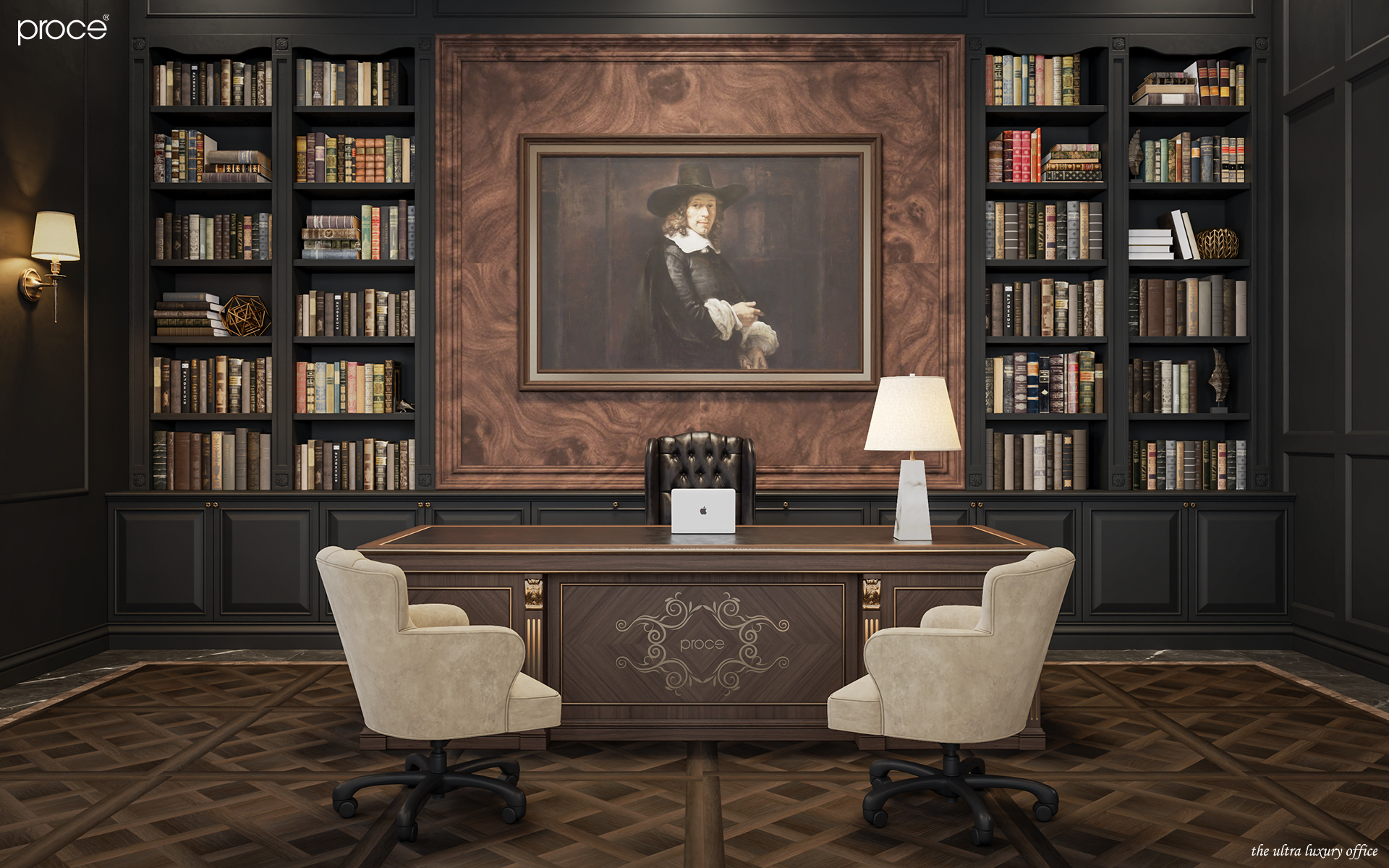
The chairman’s office should therefore be a “personal reflection” of the leader. A decisive person suits strong lines, clear shapes, and muted tones that create a sense of solidity. An intellectual leader needs a tidy space, subtle lighting, and a minimalist yet sophisticated design. An artistic soul can break the mold with artistic touches, but still maintain tight control. There is no single formula for every chairman’s office. Because power doesn’t come from copying.
Ultimately, personalization in design is what creates unique power. The chairman’s office shouldn’t resemble a showroom or a stereotypical space. When the space clearly reflects the owner’s personality, every step in the room conveys their mindset, style, and status. Power, then, isn’t measured in square meters, but in a genuine presence affirmed through design.
>> See more: 13 ideas for designing a luxurious and modern executive office.
Conclude
The power of a chairman’s office isn’t measured by its size or ostentation, but by how its design reflects the leader’s personality and vision. A spacious room lacking order, depth, or sophistication will only create a feeling of emptiness and soullessness. Conversely, a space meticulously cared for in every detail—from layout, proportions, and lighting to materials and furniture—conveys a subtle and authoritative message of power from the very first moment. The designing the chairman office is a tool for leaders to “speak” without words, making anyone who enters feel the uniqueness, decisiveness, and true stature of the leader.
=====\
PROCE – TOTAL LUXURY OFFICE SOLUTION
Website: https://proce.vn/
Youtube: https://www.youtube.com/@noithatvanphonghangsang
Fanpage: https://www.facebook.com/vanphongnhapkhauProce
GG Business: https://business.google.com/dashboard/l/15115233216900975876
Linkedin: https://www.linkedin.com/company/74359718/admin/
Hotline: 090.115.6767
#thiet_ke_phong_chu_tịch; thiet_ke_phong_chu_tich_chuan_sang;
#thiet_ke_noi_that_phong_chu_tich; #thiet_ke_phong_chu_tich_dang_cap
#noi_that_trong_thiet_ke_phong_chu_tich; Proce_thiet_ke_phong_chu_tich
#thiet_ke_phong_chu_tich_chat